

SEO Optimization: The Complete Beginner’s Guide
Search engine optimization sounds technical, but at its core it is a practical craft: you make your website the best possible answer to what people search for, and search engines reward you with free visibility. Whether you run a blog, a small business site, or an online store, SEO optimization is the difference between being invisible on Google and getting a steady stream of visitors who arrive without you paying for a single click.
SEO optimization is the process of improving a website so search engines can crawl it, understand it, and rank it higher in organic results. It covers on-page content, technical foundations, and off-page authority, and in 2026 it also determines whether AI search features cite your site. Done right, it brings free, compounding traffic for months or years.
Key Takeaways
- SEO optimization is the process of making a website easier for search engines to crawl, understand, and rank for relevant queries.
- It rests on three pillars: on-page optimization (content and keywords), technical SEO (site health and speed), and off-page SEO (links and authority).
- Beginners should follow an ordered process: audit, research keywords, fix technical issues, publish helpful content, earn links, then measure.
- Common mistakes (keyword stuffing, buying links, ignoring mobile) can hurt more than they help.
- AI search is changing the payoff of SEO: fewer searches end in clicks, so quotable, well-structured content and brand mentions now matter too.
Table of Contents
- What Is SEO Optimization?
- How Does SEO Optimization Work?
- What Are the Main Types of SEO Optimization?
- What Is a Simple SEO Optimization Process for Beginners?
- What Are the Most Common SEO Optimization Mistakes to Avoid?
- How Is SEO Optimization Changing With AI Search?
- How Do You Measure SEO Optimization Success?
- Frequently Asked Questions
- Conclusion
What Is SEO Optimization?
SEO optimization is the practice of improving a website so search engines can crawl it, understand it, and rank it for the queries its audience uses, earning unpaid traffic and visibility. The phrase is often used interchangeably with search engine optimization (SEO), and Wikipedia defines it as the process of improving the visibility and performance of web pages in search results, rather than paying for placement.
The “optimization” part matters. A brand-new website is rarely optimized: its pages may load slowly, its titles may not match what people type into Google, and search engines may struggle to even find it. SEO optimization is the ongoing work of fixing all of that, page by page and month by month. It is never a one-time setup, because search engines constantly refine how they evaluate content.
Our explainer on what is SEO covers the definition in plain language; this guide treats SEO optimization as a craft you practice.
How Does SEO Optimization Work?
SEO optimization works through the three-stage cycle every search engine follows: crawling, indexing, and ranking.
First, search engines send automated bots, called crawlers or spiders, to visit pages and read their content. Crawlers follow links from page to page, discovering new content. If your site blocks crawlers with a misconfigured robots.txt file, or if pages have no internal links pointing to them, those pages may never be discovered.
Second, the collected information is stored in a database called the index. Indexing means the search engine has read your page and decided it is eligible to appear in results. Being indexed does not mean ranking highly: it simply means you are in the running.
Third, when someone types a query, the search engine ranks the indexed pages that best match it. Google evaluates hundreds of signals, including relevance to the query, content quality, page experience (speed, mobile friendliness), and the site’s authority through links and mentions from other sites. SEO optimization is the deliberate work of improving all of these signals.
What Are the Main Types of SEO Optimization?
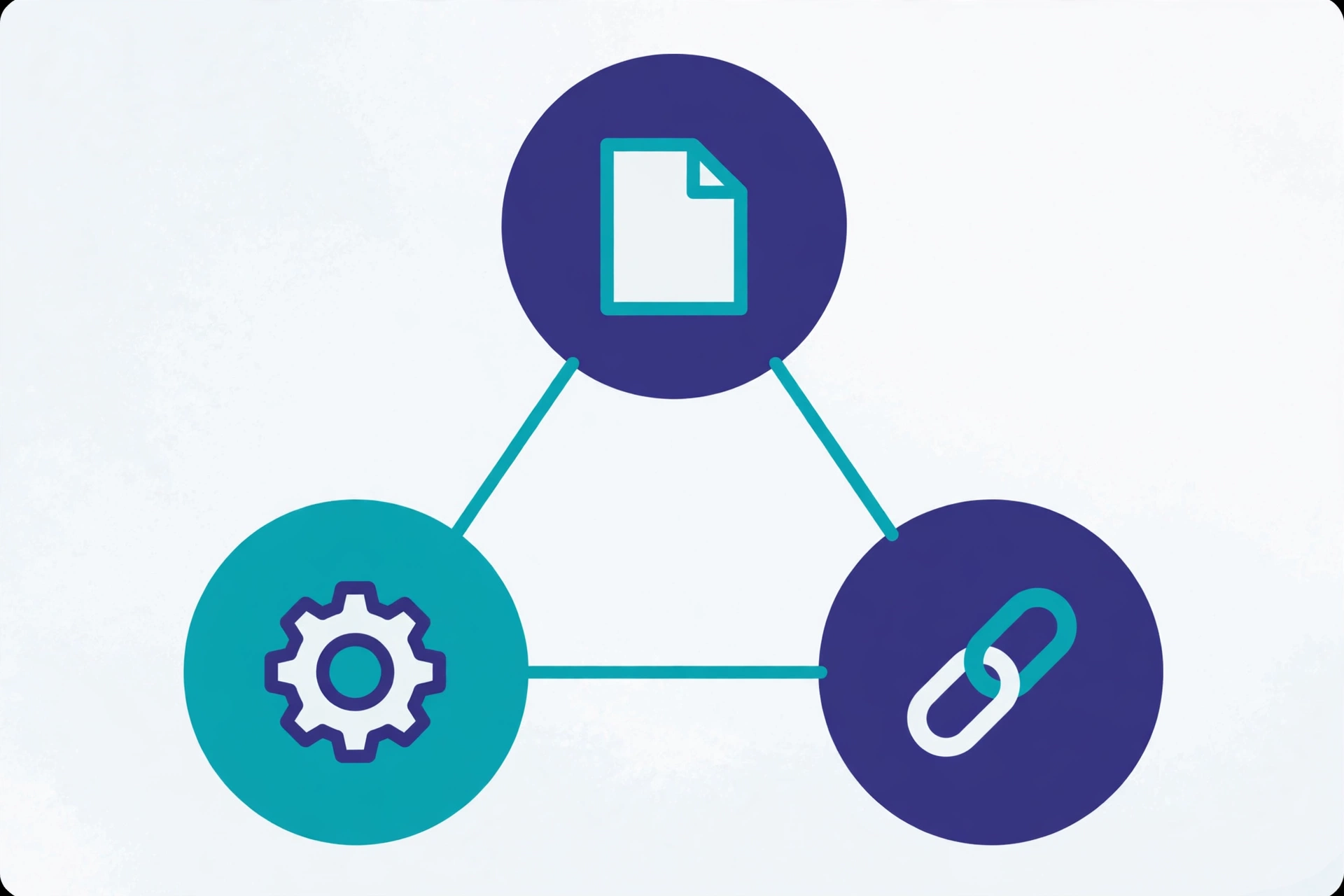
SEO optimization has three pillars: on-page, technical, and off-page. Learn on-page first, because it is fully under your control, then technical, then off-page, which takes longest to build.
On-Page SEO Optimization
On-page SEO optimization aligns each page with a specific search intent through its content, headings, titles, and internal links. It answers one question: when someone lands on this page from a search, does it clearly satisfy what they were looking for?
The fundamentals are one-time work per page: a descriptive title tag with the main keyword, a clear H1, organized H2 and H3 subheadings, natural keyword use, descriptive image alt text, and internal links to related pages. Our collection of SEO tips goes deeper into on-page habits that compound over time.
Technical SEO Optimization
Technical SEO optimization makes sure crawlers can access, interpret, and index your site efficiently. Even the best-written page will underperform on a broken foundation. Key checks include a correct robots.txt and XML sitemap, canonical tags, fast loading times (Interaction to Next Paint replaced First Input Delay as a Core Web Vital in March 2024), mobile friendliness, secure HTTPS connections, and clean rendering of JavaScript-heavy pages.
Most of this is checking settings once and monitoring occasionally with free tools like Google Search Console and PageSpeed Insights.
Off-Page SEO Optimization
Off-page SEO optimization builds your site’s reputation through signals from the rest of the web: backlinks from reputable sites, brand mentions, and reviews. Search engines treat a link from a trusted site as a vote of confidence. This is the slowest pillar, so it works best as a byproduct of publishing content people genuinely want to reference. Buying links violates Google’s guidelines and risks penalties that erase months of progress.
The pillars overlap: great content on an uncrawlable site will not rank, and a technically healthy site with thin content will not rank either. Fix technical basics first, publish genuinely helpful pages second, and let authority grow third.
What Is a Simple SEO Optimization Process for Beginners?

Here is an ordered workflow for any site:
Step 1: Set up measurement tools. Connect Google Search Console and Google Analytics before changing anything. Search Console shows which queries already bring impressions and clicks, which pages are indexed, and which technical errors Google found.
Step 2: Run a technical audit. Use Search Console’s coverage and Page Experience reports plus a free PageSpeed Insights test of your homepage. Fix blocking issues first: pages Google cannot index, missing sitemaps, mobile usability errors, and slow load times.
Step 3: Research keywords by intent. List the queries your audience types, grouped by intent: informational (how, what, why), commercial (best, review, compare), and transactional (buy, price, near me). Free starting points include Google’s autocomplete, the “People also ask” box, and Search Console’s own query data. Our walkthrough of how to do SEO expands on keyword research for beginners.
Step 4: Map one keyword to one page. Every important page should target one primary keyword and answer its intent completely. Avoid targeting the same keyword with two pages, which splits your ranking power.
Step 5: Optimize the page itself. Rewrite the title tag and meta description around the primary keyword, structure content with clear H2 and H3 headings, answer the main question early and directly, add descriptive alt text to images, and link to related pages on your site. Write for the reader first.
Step 6: Publish helpful content consistently. One optimized page is a start, not a strategy. Publish regularly on topics your audience searches for, aiming for depth over volume: a single thorough article beats five thin ones. Cover related subtopics so search engines associate your site with the broader subject, which is called building topical authority.
Step 7: Earn links, then measure monthly. Share new content where your audience gathers and create reference-worthy resources that other sites want to cite. Review Search Console monthly and double down on what works.
SEO optimization fits inside a wider digital marketing strategy, and CPN Tech covers the broader landscape in its guides on the CPN Tech homepage. Treat this seven-step loop as a cycle, not a finish line: audit, research, optimize, publish, earn, measure, repeat.
What Are the Most Common SEO Optimization Mistakes to Avoid?
Beginners usually lose progress to a handful of avoidable errors.
Keyword stuffing: repeating the target keyword unnaturally to rank higher. Search engines penalize this, and readers bounce from pages that read like robot text.
Thin or duplicated content gives search engines no reason to rank you. If a topic cannot support a genuinely useful page, skip it.
Ignoring mobile and speed: most searches happen on phones, and Google predominantly uses the mobile version of pages for ranking.
Buying links violates Google’s spam policies. Caught sites can lose all their rankings overnight. Earn links by being worth citing.
Neglecting technical basics: no XML sitemap, broken internal links, duplicate title tags, images without alt text. None is hard to fix, but together they signal a poorly maintained site.
The fundamentals have not changed, but AI-powered answers now sit at the top of many searches, and that shifts what success looks like. Google said at I/O in May 2026 that AI Overviews had more than 2.5 billion monthly users and AI Mode more than 1 billion. Comscore measured AI Overviews on 39.4 percent of US desktop searches in June 2026, up from 25.8 percent in July 2025. Clicks are harder to earn: SparkToro found 58.5 percent of US searches ended without a click, and Pew Research found users clicked a traditional result on only 8 percent of visits to pages with an AI summary, versus 15 percent without one. Three practical shifts follow. First, structure content so AI systems can quote it: clear definitions, direct 40 to 60 word answers under question headings, bullet lists, and comparison tables are the formats AI Overviews and assistants like ChatGPT search, Copilot, and Perplexity prefer to cite. These systems retrieve pages through the same search indexes, so a page that cannot be crawled or understood cannot be cited. Second, invest in being mentioned, not just ranked: AI answers summarize what the web says about a brand, so reviews, forum discussions, and third-party comparisons now carry more weight. Third, measure new signals. Since August 31, 2026, every Search Console property includes a generative AI performance report showing impressions in AI Overviews and AI Mode. Track which pages earn AI impressions alongside traditional clicks. Google’s guidance is reassuring: no special tricks are required beyond solid best practices. The winners in AI search are the sites that were already doing SEO optimization well: crawlable, clearly structured, factual, and trusted. Track a small set of metrics monthly: Keyword rankings and visibility: track average position across your target keyword set in Search Console. Rising average positions show optimization is working even before traffic follows. Organic impressions and clicks: impressions show how often pages surface; clicks show how often searchers choose you. A growing gap between them usually means titles and meta descriptions need work. Organic click-through rate: CTR by page reveals which titles earn attention. Small rewrites of underperforming titles are among the highest-leverage edits in SEO. Engagement and conversions: pages per session, time on page, and conversion rate by landing page connect traffic to real outcomes. Traffic that never converts signals intent mismatch. Technical health: watch Search Console’s coverage report for indexing errors and the Core Web Vitals report for experience regressions. Our guide to small business SEO adapts this measurement approach for smaller sites with local audiences. SEO optimization is the process of improving your website so it appears higher in free search results. It involves making your content more relevant to what people search for, fixing technical issues that block search engines, and building your site’s reputation through links and mentions from other websites. Technical fixes can show effects within days to weeks once pages are recrawled. New content and authority building usually take three to six months or longer, depending on competition. Brand-new sites in competitive niches should expect the longer end of that range. Yes. AI Overviews, AI Mode, ChatGPT search, Copilot, and Perplexity all retrieve pages through search indexes, so a page that cannot be crawled or understood is unlikely to be cited. What changed is the payoff: fewer searches end in clicks, so teams now measure AI citations alongside rankings and traffic. On-page SEO optimization covers what is on your pages: content, keywords, headings, titles, and internal links. Technical SEO covers how search engines access your site: crawling, indexing, speed, mobile friendliness, and security. Off-page SEO covers your reputation across the web: backlinks, brand mentions, and reviews. Yes. The essential tools are free: Google Search Console for monitoring, PageSpeed Insights for speed checks, and Google’s own search results for keyword research. What SEO costs is time: research, writing, and consistent publishing. Paid tools speed things up, but none replaces doing the fundamentals well. Expecting fast results and quitting too early, followed closely by keyword stuffing and publishing thin content. SEO optimization compounds over time: the sites that win keep publishing helpful content and fixing issues consistently month after month while competitors give up. SEO optimization is not a trick or a shortcut. It is the disciplined process of making your website genuinely the best answer for the queries your audience types, then making sure search engines can find, understand, and trust it. The three pillars, on-page content, technical health, and off-page authority, give you the map, and the seven-step process in this guide gives you the route. Start this week: connect Search Console, fix your technical basics, pick one keyword with clear intent, and publish one page that answers it better than anything currently ranking. Then repeat the loop. Clear, factual, well-structured pages are the ones that win.How Is SEO Optimization Changing With AI Search?

How Do You Measure SEO Optimization Success?
Frequently Asked Questions
What is SEO optimization in simple terms?
How long does SEO optimization take to work?
Is SEO optimization still worth it with AI search?
What is the difference between on-page, off-page, and technical SEO?
Can I do SEO optimization myself for free?
What is the biggest SEO optimization mistake beginners make?
Conclusion