
What Is a VPN Concentrator? How It Works (2026 Guide)
Remote and hybrid work turned secure remote access into a daily necessity: employees log in from homes, hotels, airports, and branch offices, and every connection must be encrypted, verified, and routed to the right corporate resources.
A VPN concentrator is a networking device or software service that creates and manages hundreds or thousands of encrypted VPN tunnels at once. It authenticates each remote user, builds an encrypted tunnel for their traffic, assigns an internal IP address, and routes data between the remote device and company systems from one centralized point.
In this guide, you will learn exactly what a VPN concentrator does, how it builds encrypted tunnels step by step, how it compares to a VPN server and a VPN router, which hardware and software options exist, the key features worth looking for, and the modern alternatives many companies now choose instead.
Key Takeaways
- A VPN concentrator is enterprise VPN hardware or software that accepts and manages hundreds or thousands of encrypted VPN tunnels at once.
- It authenticates every user, builds each encrypted tunnel, assigns internal IP addresses, and routes traffic into the corporate network.
- It differs from a VPN server (any single tunnel endpoint) and a VPN router (small scale, only a few dozen connections).
- Standalone concentrator boxes are fading; the same job now lives inside firewalls, routers, and cloud services.
- Because it faces the internet, a concentrator is a prime attack target, so fast patching and multi-factor authentication are essential.
Table of Contents
- What Is a VPN Concentrator?
- How Does a VPN Concentrator Work?
- VPN Concentrator vs VPN Server: What Is the Difference?
- Hardware vs Software VPN Concentrators
- What Key Features Should a VPN Concentrator Have?
- What Are the Benefits of a VPN Concentrator for Businesses?
- What Are the Limitations of a VPN Concentrator?
- Real-World Examples of VPN Concentrators
- VPN Concentrator FAQ
- Conclusion
What Is a VPN Concentrator?
At its simplest, a VPN concentrator is the front door of a company network for everyone who is not in the office. Home workers, traveling staff, contractors, and entire branch offices connect to it over the internet, and it admits each of them through their own encrypted tunnel. The name comes from this job: it concentrates many VPN tunnels in one place.
In technical terms, a VPN concentrator is a specialized enterprise VPN gateway that terminates remote access VPN and site to site VPN connections at scale. A remote access connection links one person, through a VPN app on their laptop or phone, to the office network. A site to site connection links a whole office, through its router, to headquarters over a permanent tunnel. Most concentrators handle both types at once.
A single concentrator can serve hundreds or even thousands of simultaneous users without the slowdown an ordinary server would suffer. Dedicated encryption hardware, centralized authentication, and per-user access rules make that scale possible. The classic example was dedicated virtual private network hardware such as Cisco’s VPN 3000 series from the early 2000s; today the same function often runs as software inside a firewall or as a virtual appliance in the cloud.
What Is VPN, Exactly?
VPN stands for virtual private network: technology that wraps your internet traffic in an encrypted tunnel so nobody on the local network, not even your internet provider, can read or tamper with it. Everything between your device and the VPN endpoint is scrambled with strong VPN encryption such as AES-256.
A VPN concentrator is the business version of the same idea: instead of one tunnel to the public internet, it manages thousands of tunnels into one private company network. For a plain-language primer on the consumer side, Cloudflare’s learning center explains what a VPN is with clear diagrams.
How Does a VPN Concentrator Work?
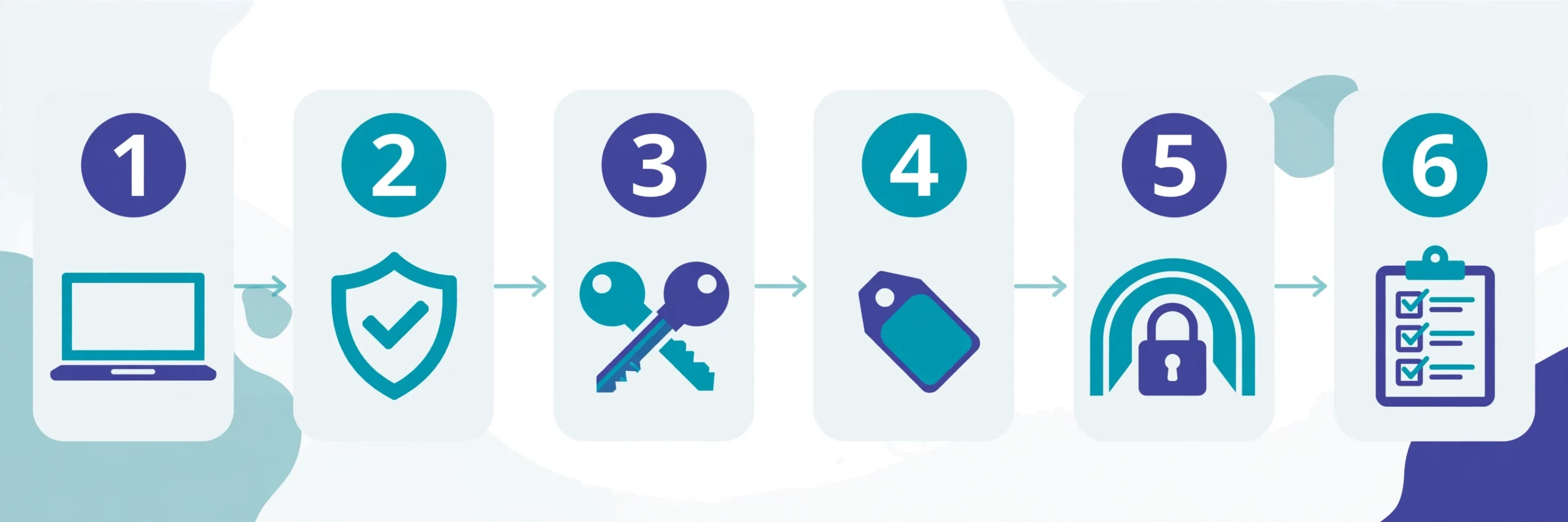
A VPN concentrator runs the same connection routine for every remote user, hundreds or thousands of times in parallel. That routine has six steps, repeated for each tunnel.
- Accept the connection. A remote user’s VPN client, or a branch office router, contacts the concentrator’s public address.
- Verify identity. The concentrator authenticates the user or device, usually with a password plus a second factor such as an authenticator app code, or a digital certificate. Many companies tie it into their existing login system so one account works everywhere. Because weak or reused passwords are a common break-in route, IT teams often point staff to a password manager setup guide to keep every credential unique.
- Negotiate the tunnel. Both sides agree on encryption keys and a protocol, most often IPSec with IKEv2 or SSL VPN over TLS.
- Assign an inside address. The remote device receives an IP address from the company’s internal range, so servers and apps treat it like a computer in the office.
- Encrypt and forward. Traffic arrives encrypted, the concentrator decrypts it and forwards it to the intended server or app, then encrypts the replies on the way back.
- Enforce the rules. The concentrator decides what each user may reach: a contractor might see one application while the IT team sees everything. It also logs every connection for the security team.
Doing all of this centrally is the whole point. This six-step routine is how a VPN concentrator works in practice: thousands of these handshakes running in parallel, all managed from one place. Encrypting traffic for hundreds of people takes serious processing power, so concentrators use dedicated crypto hardware or scaled-up virtual capacity, plus one set of access rules and one audit log for the security team.
VPN Tunnel Explained
A vpn tunnel explained in plain terms is a sealed, encrypted pathway through the public internet. Here is what happens inside it.
First, your device and the concentrator perform a handshake using IKEv2 (Internet Key Exchange version 2). They prove their identities to each other and agree on fresh encryption keys. IKEv2 is popular because it reconnects quickly when you switch networks, for example moving from office Wi-Fi to mobile data.
Then the actual data travels inside IPSec in tunnel mode. Each packet is encrypted, wrapped in a new packet addressed to the concentrator, and sent across the internet. Anyone watching sees only scrambled data moving between two addresses. At the concentrator, the wrapper is removed, the data is decrypted, and the original packet continues into the company network.
Some concentrators also offer SSL VPN, which builds the tunnel over TLS, the same encryption behind HTTPS websites. SSL VPNs are handy because they work through a web browser and usually pass through firewalls and hotel Wi-Fi without special configuration.
VPN Concentrator vs VPN Server: What Is the Difference?
The vpn concentrator vs vpn server question comes up constantly because the terms overlap. A VPN server is any computer or service that terminates VPN tunnels, handling one connection or one thousand. A VPN concentrator is a VPN server built specifically for very large numbers of connections, with centralized authentication, per-user access rules, logging, and failover. Every concentrator is a VPN server, but a small VPN server is not a concentrator: the difference is scale plus management features.
| VPN Server | VPN Concentrator | |
|---|---|---|
| What it is | Any device or software that ends VPN tunnels | A VPN server engineered for massive scale |
| Typical connections | One to a few hundred | Hundreds to thousands |
| Authentication | Basic, often per-server | Centralized, tied to company login systems |
| Access control | Limited | Per-user and per-group rules |
| High availability | Rarely built in | Load balancing and failover standard |
| Best for | Small teams, single use cases | Enterprises, remote workforces, branch networks |
A related comparison is the VPN router. A VPN router is a router with VPN support for a handful of connections, fine for a small office or a home. It is not built for hundreds of users, which is exactly where a concentrator takes over.
Hardware vs Software VPN Concentrators
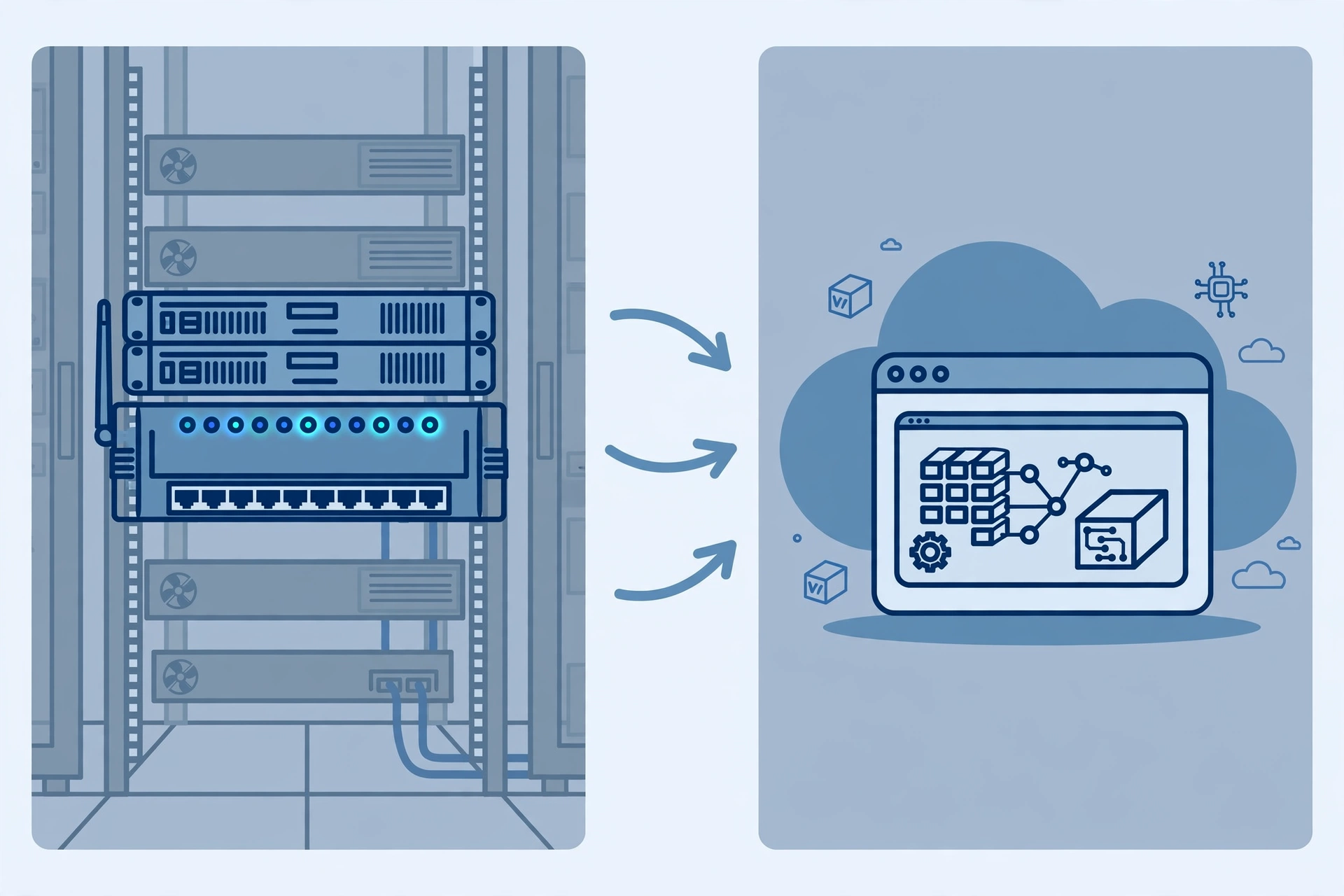
You might picture a VPN concentrator as a rack-mounted box. That is only half right today: concentrators come as hardware or software, and most companies choose based on scale, budget, and where their infrastructure lives.
Dedicated Hardware Appliances
A hardware concentrator is a purpose-built appliance with dedicated cryptographic processors that encrypt and decrypt traffic at high speed. Vendors size them by concurrent tunnels and throughput, so you buy the model matching your headcount plus room to grow. Hardware suits large offices and data centers needing predictable performance, and keeps key material on a physical device the company controls. The trade-off is cost: appliances, support contracts, rack space, and power add up, and scaling means buying more boxes.
Virtual and Cloud Concentrators
A virtual concentrator is software on a virtual machine or in the cloud that performs the same job. It costs less up front, scales by adding capacity instead of hardware, and suits companies whose infrastructure already lives in the cloud. It pairs naturally with cloud-hosted resources: a team might keep shared files in cloud storage while the concentrator controls who reaches the office network and which apps they may open.
The catch is shared resources. A virtual concentrator competes for CPU with other workloads, and heavy encryption can become a bottleneck without enough allocated power. Many companies run a hybrid: hardware at headquarters, virtual concentrators in regional clouds.
What Key Features Should a VPN Concentrator Have?
Not all concentrators are equal. Whether you are evaluating an appliance or a virtual gateway, these features matter most.
IKEv2, IPSec, and SSL VPN Protocol Support
A concentrator should support the modern standards your devices already speak. IPSec with IKEv2 is the workhorse for IPSec VPN deployments: fast, stable, and native to Windows, macOS, iOS, and Android. An SSL VPN option matters for users behind restrictive networks, since it tunnels over TLS/SSL on standard web ports. OpenVPN and WireGuard support is a plus. Avoid anything still relying on PPTP: its encryption is broken.
Load Balancing and Failover
A concentrator serving a whole company cannot be a single point of failure. Load balancing spreads tunnels across multiple units or cores so none is overwhelmed and performance stays steady through the day. Failover takes over when hardware fails: a standby unit, often a warm spare sharing a virtual IP address, picks up the tunnels automatically.
What Are the Benefits of a VPN Concentrator for Businesses?
For organizations with a real remote workforce, a concentrator delivers several concrete advantages.
- Secure remote access at scale. Hundreds or thousands of employees get encrypted connections to office resources from anywhere, without performance degrading as headcount grows.
- Centralized security control. Authentication, encryption standards, and access rules are managed in one place, so every user gets the same protection and the security team gets one audit trail.
- Consistent policy enforcement. Per-user rules decide exactly which servers and apps each person may reach, essential when contractors and full-time staff share the network.
- Reduced endpoint burden. Individual laptops do not need complex configurations; the concentrator handles encryption, key management, and IP assignment centrally.
- Branch office connectivity. Site to site tunnels link warehouses, shops, and regional offices into headquarters with no VPN software for local staff to touch.
What Are the Limitations of a VPN Concentrator?
Concentrators are powerful, but they are not the right answer for every company. The main limitations are cost, complexity, and architecture.
A concentrator is expensive to buy and maintain, and it needs specialist IT skills to configure and monitor. Worse, an unpatched concentrator is one of the most attacked devices a company owns: it sits at the network edge and guards the entrance to everything inside. In September 2021, the NSA and CISA warned that VPN servers are attractive entry points for attackers, and in January 2024, exploited flaws in Ivanti’s remote access gateways forced emergency patching across US federal agencies. The lesson: patch fast, require multi-factor authentication, disable unused protocols, and monitor logs. NIST’s Guide to Enterprise Telework, Remote Access, and BYOD Security (SP 800-46 Rev. 2) covers these practices in detail.
The concentrator cannot fix every threat. Attackers regularly send fake VPN login pages and IT alerts to steal credentials, so staff should know how to tell if an email is a scam before typing a password.
Many companies now combine a concentrator with newer approaches.
SD-WAN
SD-WAN (software-defined wide area networking) manages how traffic moves between offices and cloud apps across many links at once, choosing the best path per application. It overlaps with the site to site job of a concentrator but adds smarter routing, and many SD-WAN platforms include VPN-style encryption between sites.
Zero-Trust Network Access
Zero trust flips the old model. Instead of placing a remote user inside the whole company network, zero-trust network access connects each user to one specific application after continuously verifying identity and device health. There is no broad network access to steal if credentials leak, which shrinks the blast radius of a breach.
SASE
SASE (secure access service edge, pronounced “sassy”) combines network and security functions into a cloud service delivered close to the user, including secure web gateways, cloud firewalls, and zero-trust access. It suits cloud-first companies whose users rarely touch a physical office network.
| VPN Concentrator | SD-WAN | ZTNA | SASE | |
|---|---|---|---|---|
| Best for | Large remote workforces, branch networks | Multi-site companies, smart WAN routing | App-level access, least privilege | Cloud-first, distributed teams |
| Access model | Full network access via tunnel | Optimized site connectivity | Per-app access, no network entry | Cloud-delivered security stack |
| Trust model | Trust after login | Trust after login | Never trust, always verify | Never trust, always verify |
| Deployment | Appliance, VM, or cloud | Edge devices plus controller | Cloud service plus agents | Cloud service |
Real-World Examples of VPN Concentrators
You rarely see the words “VPN concentrator” on a modern product box, but the function is everywhere in enterprise networking.
Cisco’s Meraki MX appliances can run in VPN concentrator mode, typically deployed one-armed behind the edge firewall, to terminate site to site tunnels from branch offices. Cisco’s deployment guide recommends placing the concentrator behind an edge firewall rather than directly on the internet. Fortinet’s FortiGate firewalls include high-capacity remote access VPN gateways used by enterprises for thousands of concurrent users, and Palo Alto Networks’ GlobalProtect provides concentrator-style remote access with per-user policy enforcement.
In the cloud, the trend is explicit: in November 2025, AWS launched a managed Site-to-Site VPN Concentrator letting up to 100 low-bandwidth branch sites connect through one AWS Transit Gateway attachment, aimed at companies with 25 or more remote sites. These are product capabilities, not endorsements; the right choice depends on a company’s size, vendors, and security needs.
VPN Concentrator FAQ
Is a VPN concentrator the same as a VPN router?
No. A VPN router handles a handful of connections for homes or small offices. A VPN concentrator is built for hundreds or thousands of simultaneous encrypted tunnels, with centralized authentication, per-user rules, logging, and failover. Same problem, very different scale.
Can a VPN concentrator be software?
Yes. Many run as virtual machines or cloud services instead of dedicated appliances. Virtual concentrators cost less up front and scale by adding capacity, which suits cloud-based companies, but they need enough allocated processing power for the heavy encryption workload.
Where does a VPN concentrator sit on the network?
Typically at the network perimeter, between the public internet and the internal network, often in a demilitarized zone (DMZ) or behind the main edge firewall, so it can inspect and secure every incoming remote connection before traffic reaches internal servers.
Are VPN concentrators still used in 2026?
Yes, but rarely as standalone boxes. The job moved into business firewalls, routers, and cloud services: AWS launched a managed Site-to-Site VPN Concentrator in November 2025. In 2026, many companies run concentrator-style remote access and zero-trust tools side by side.
Do I need a VPN concentrator for a small business?
Probably not a dedicated one. For a handful of remote staff, the VPN feature in a business-grade firewall or router is usually enough and far cheaper. Look for IKEv2 support, multi-factor authentication, and a vendor that still ships security updates.
Is a VPN concentrator a firewall?
No, although the two often live in the same box. A firewall filters traffic and blocks threats; a concentrator terminates encrypted VPN tunnels and admits remote users into the corporate network. Large organizations run both, with the concentrator usually behind the firewall.
How many users can a VPN concentrator handle?
It depends on the model. Small appliances may support a few hundred concurrent tunnels, enterprise units handle several thousand, and cloud or clustered deployments scale further. Vendors size by concurrent connections and throughput, so plan around your peak simultaneous users.
Conclusion
A VPN concentrator is the enterprise answer to secure remote access: one centralized system that authenticates users, builds encrypted tunnels, and routes remote workers and branch offices into the company network at scale. It differs from an ordinary VPN server in capacity and management, comes as hardware or software, and relies on modern protocols like IKEv2, IPSec, and SSL VPN.
The standalone concentrator box is fading, but the job is not. It now lives inside firewalls, routers, and cloud services, alongside SD-WAN, zero-trust access, and SASE. The fundamentals stay the same: strong encryption, strict authentication, and fast patching.
For more beginner-friendly explainers on networking, security, and software, explore CPN Tech.