
What Is the Purpose of AI? A Simple Guide
People ask about artificial intelligence in many ways, but behind most questions sits one plain question: what is the purpose of ai? The direct answer is that the purpose of AI is to help people do useful work with information at a scale and speed that would be slow, costly, or impossible by hand: to find patterns in data, make predictions, support decisions, automate routine tasks, and create drafts that a person can then check, improve, and use. AI exists to extend human ability, not to replace human judgment.
That purpose sounds simple, and in a way it is. The confusion starts because AI is not one product. It is a family of methods built into software, apps, devices, and services, and each one serves a different slice of that larger purpose. A spam filter, a medical image tool, a translation app, and a chatbot all count as AI, but they solve different problems. This guide explains the purpose of AI in plain language, shows where it helps most, and names its limits honestly.
Key Takeaways
- The purpose of AI is to help people work with information faster and at larger scale: finding patterns, predicting outcomes, supporting decisions, and automating routine work.
- Most AI today is narrow AI: excellent at one kind of task and useless outside it, so choosing the right tool matters more than choosing the most powerful one.
- AI is usually software powered by data and computing hardware, not a robot with a mind of its own.
- AI serves its purpose best when a person defines the goal, checks the output, and stays responsible for the final decision.
- AI is the wrong tool when the data is poor, the stakes need human accountability, or a simple rule would do the job.
In this guide: purpose in simple terms, history, the software question, how AI works, everyday life, work, science and health, limits, the right-tool test, purpose by person, and FAQs.
What Is the Purpose of AI in Simple Terms?
The purpose of AI is to take a task that depends on recognising patterns, processing large amounts of information, or producing a likely answer, and to do that task quickly, consistently, and at scale. A human expert might read ten reports in a day. An AI system can scan ten thousand reports, pull out recurring themes, and present a short summary. The human still decides what the summary means.
It helps to separate three words people often mix up. A purpose is the broad reason a tool exists. A goal is the result you want in one situation, such as cutting reply times in half. A task is the single job you hand to the tool, such as drafting one email reply. AI serves its purpose when the task is clear, the data is good enough, and the result can be checked. Most AI today is narrow AI, built for one job.
Artificial Intelligence Introduction: Where the Idea Came From
An artificial intelligence introduction usually starts with a simple definition: artificial intelligence is the field of computer science that builds systems able to perform tasks that normally require human intelligence, such as understanding language, recognising images, solving problems, and learning from experience. The idea is older than the modern chatbot. In the 1950s, researchers asked whether a machine could be said to think, and they built early programs that played games and solved puzzles.
Three changes turned AI into an everyday tool. Computing power grew enormously, the internet produced huge amounts of text, images, and video to learn from, and machine learning methods improved, especially deep learning, which uses layered networks loosely inspired by how brains process information. AI was built to solve information problems that fixed rules alone could not solve well, such as understanding messy human language or recognising objects in photos.
Is AI a Software, a Machine, or Something Else?
So, is ai a software? In most cases, yes: the AI you use is software, a program or service running on computers, phones, or cloud servers. A chatbot is software. A recommendation engine inside a shopping app is software. A fraud detection system inside a bank is software. When you open an app and tap a button, you are usually talking to AI software through an ordinary interface.
But software alone does not explain the whole picture. An AI system has three parts. The software is the trained program that turns an input into an output. The data is what the model learned from: examples, documents, images, or records that shaped its behaviour. The hardware is the computers, chips, and servers that run the model. Change any one part and the system behaves differently, and better data often improves a system more than a bigger model. Sometimes AI also lives inside a machine, such as a robot vacuum or a self-driving car, but most AI has no body at all.
How Does AI Serve Its Purpose?
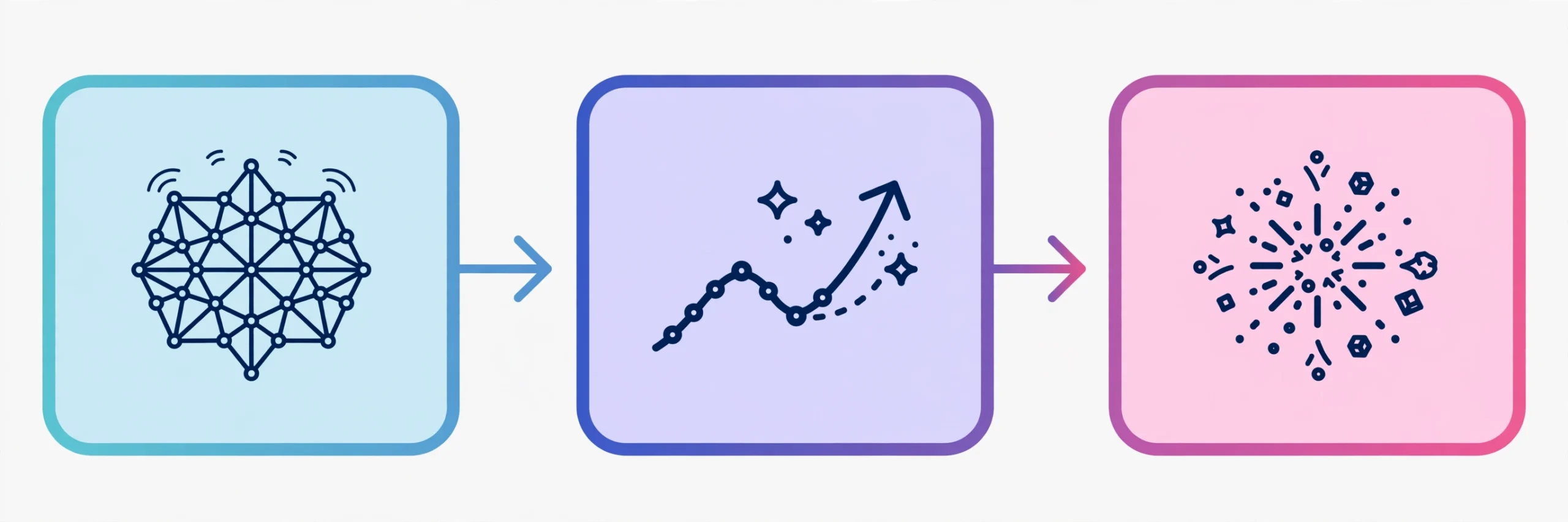
AI serves its purpose through a small set of abilities. First, AI recognises patterns. A system trained on thousands of labelled photos can learn what a cat looks like, what a tumour looks like on a scan, or what a fraudulent transaction looks like in a stream of payments. Second, AI predicts. Given past data, a model estimates what is likely next: tomorrow’s demand, the chance a customer will leave, or the next word in a sentence. Predictions are probabilities, not certainties.
Third, AI generates. Generative AI creates new text, images, code, or video based on patterns it learned. Generated output is a draft, not a fact, so checking matters: the system can produce fluent text that is wrong or invented. Fourth, AI automates repeated tasks such as sorting emails, transcribing meetings, or routing support tickets. Fifth, AI personalises, tailoring recommendations or practice exercises from past choices. None of this requires understanding the world the way a person does, which is why human review stays part of the purpose.
What Is AI For in Everyday Life?
Most people already use AI every day without thinking of it as AI. A phone keyboard predicts the next word. A maps app predicts traffic and suggests a faster route. A photo app groups faces and finds pictures of a specific person. Email sorts spam away from messages that matter. A streaming service recommends a show based on what you watched before. Each is a small, narrow AI job, and each serves the same purpose: saving time and attention.
AI also helps with language and access: translation tools, hands-free voice assistants, and accessibility tools that read text aloud or turn speech into captions. At home, AI appears in smart thermostats and robot vacuums. Judge each tool one job at a time: does it save time, reduce errors, or make something possible that was hard before?
What Is AI For at Work and in Business?

At work, the purpose of AI is usually measured in time, quality, and consistency. A support team uses AI to draft replies, sort tickets by urgency, and answer common questions instantly, so human agents can spend time on complex cases. A marketing team uses AI to draft outlines and summarise feedback from hundreds of reviews. A finance team uses AI to flag unusual transactions and forecast cash flow. In each case the AI does the first pass, and a person makes the final call.
Small businesses benefit differently. A one-person shop can use AI tools to draft product descriptions and summarise customer messages, which is why our guide to choosing the best ai tool focuses on matching the tool to the task. Larger companies use AI for scale, such as forecasting demand across thousands of products. The purpose of AI at work is not to remove people. It is to move people to the parts where judgment matters most.
What Is AI For in Science, Health, and Education?
In science, AI helps researchers handle data too large for manual analysis. Climate models, astronomy surveys, and genetics research produce enormous datasets, and AI can spot patterns that point researchers toward the next experiment. In drug discovery, AI models predict which molecules are worth testing, although human scientists still run the experiments and verify results. The purpose here is acceleration: faster hypotheses and more time for the experiments that matter.
In health care, AI supports doctors rather than replacing them, helping read scans and summarise patient notes. A diagnosis still needs a qualified clinician, because AI can be wrong in ways that look confident. In education, AI tutors give instant feedback and adapt practice questions to a student’s level, but copying an answer without learning defeats the purpose entirely.
What AI Is Not For: Limits That Define Its Purpose
Knowing what AI is not for is part of understanding what it is for. AI is not a source of truth. A chatbot can state a false fact fluently or invent a citation, because it predicts likely text rather than checking a verified record. Anything that matters, such as medical advice, legal facts, or financial figures, must be checked against a trusted source. AI is also not a moral judge: it cannot decide what is fair, and using it to screen applicants or approve loans without human review risks repeating biases in the training data.
AI is not a replacement for expertise or original thinking, and it is not always the efficient choice. Training large models uses large amounts of computing power and energy, so for a small, simple job, a rule, a template, or a spreadsheet is faster, cheaper, and easier to explain. Finally, AI is not conscious and does not have intentions in the human sense. Treating it as a mind leads to trusting it too much because it sounds confident, or fearing it as if it had its own goals.
How to Tell Whether AI Is the Right Tool for a Job
A simple five question test covers most decisions. Is the job repeated or data heavy? Can you state the goal in one sentence and check the result? Is the data good enough? What happens if the AI is wrong? Is there a simpler tool that already works? If you cannot tell good output from bad output, you cannot use AI safely. Low stakes tasks, such as drafting a social post, tolerate errors. High stakes tasks need strong human review.
| Question | If yes | If no |
|---|---|---|
| Is the task repeated or data heavy? | AI is worth testing | A simple tool may be faster |
| Can you check the output? | AI can assist safely | Do not use AI yet |
| Is the data reliable and current? | Results are more trustworthy | Fix the data first |
| Are the stakes low, or is review strong? | AI can speed up work | Keep a person in charge |
| Is AI simpler than the alternative? | Use AI | Use the simpler tool |
Run a small test before committing: give the tool ten real examples, check every output, and measure time saved and errors found. If it saves time without adding new errors, expand its use gradually. The purpose of AI is served by a tool that earns trust in stages, not by a tool trusted all at once because it sounds impressive.
The Purpose of AI for Different People
| Person | What AI is for | What to watch out for |
|---|---|---|
| Student | Simpler explanations, practice questions, draft feedback | Copying answers, trusting invented facts |
| Worker | First drafts, summaries, sorting, automation | Skipping checks, sharing private work data |
| Small business owner | Drafting, design, customer replies, forecasting | Brand sameness, wrong facts in public content |
| Researcher | Pattern finding in large datasets, screening | Overfitting to past data |
| Creator | Ideas, outlines, editing help, image drafts | Generic output, originality questions |
| Manager | Forecasting, reporting summaries, decision support | Treating a prediction as certain |
This table explains why one definition of purpose never fits everyone. A student needs a tutor, a business owner needs leverage, and a researcher needs a pattern finder. The shared purpose is still the same: help a person do information work better. For a broader look at more independent systems, see our guide on what is agentic ai, and for practical first steps, our guide on how to use ai explains how beginners can start with small, checkable tasks.
Frequently Asked Questions
What is the purpose of AI in one sentence?
The purpose of AI is to help people work with information faster and at larger scale, by finding patterns, making predictions, supporting decisions, automating routine tasks, and creating drafts that people can check, improve, and use in daily life and at work.
Is AI a software?
In most cases, yes. The AI you use is usually software running on a phone, computer, or cloud server, trained on data and run on computing hardware. AI can also live inside a machine, such as a robot or a car, but the AI part is still software working with sensors and hardware.
What is the main goal of artificial intelligence?
The main goal of artificial intelligence is to build systems that can perform tasks that normally require human intelligence, such as understanding language, recognising images, solving problems, and learning from experience, so people can solve problems faster and more reliably.
What is the purpose of AI in business?
In business, the purpose of AI is to save time, improve consistency, and support better decisions: drafting and sorting customer messages, forecasting demand, detecting fraud, summarising feedback, and automating routine work so staff can focus on complex cases and judgment calls.
Can AI replace human judgment?
No. AI can support judgment with patterns, predictions, and drafts, but it cannot take moral responsibility, understand context the way a person does, or guarantee that its output is true. High stakes decisions need a qualified person who checks the evidence and owns the result.
Conclusion
The purpose of ai is not mysterious once you strip away the hype. AI exists to help people handle information better: to find patterns in data too large to read by hand, to predict likely outcomes, to support decisions, to automate routine work, and to create useful drafts. It does this best as an assistant, in narrow, well defined jobs, with a person setting the goal and checking the result. It does it worst when the goal is vague, the data is poor, the stakes are high, or nobody checks the output.
Take one habit from this guide: name the job, check the data, measure the result, and keep a person in charge. Start with one small, checkable task and let trust grow from results, not promises. To explore further, visit the CPN Tech homepage for more beginner friendly guides explained simply.