
Ecommerce Marketing Agency: What It Does
An online store can have a good product, a clean website and steady traffic, and still struggle to make a profit. That gap is usually not a traffic problem. It is a system problem: ads, product pages, emails and checkout are not working together, and nobody is watching the margin between what a customer costs and what that customer is worth over time.
An ecommerce marketing agency is a specialist team that plans and runs the marketing of an online store, including search engine optimization, paid ads, email and SMS marketing, conversion rate optimization, content and marketplace sales, so that traffic turns into profitable orders and repeat customers. Unlike a general agency, it is judged on revenue, margin and repeat purchase rate, not only on clicks or impressions.
This guide explains what such an agency does, what it costs in 2026, when hiring one makes sense, and how to choose wisely. Readers new to online selling can also explore the beginner-friendly guides on CPN Tech first.
Key Takeaways
- An agency runs acquisition, conversion and retention as one system.
- Judge success by margin, acquisition cost, lifetime value, repeat rate and Marketing Efficiency Ratio.
- In 2026, small to mid-sized stores commonly pay 3,000 to 10,000 dollars per month, plus ad spend.
- Hire when you need several channels at once; build in-house when one channel justifies a specialist.
- Before signing, ask for revenue case studies, a named team, a sample report and an exit clause.
Table of Contents
- What is it?
- Services offered
- Difference from a general agency
- Cost in 2026
- When to hire
- How to choose
- First 90 days
- How to measure success
- Mistakes to avoid
- FAQs
- Conclusion
What is an ecommerce marketing agency?
An ecommerce marketing agency is a team hired to grow an online store. Its clients sell physical products, digital products or subscriptions through their own website, through marketplaces such as Amazon, or through both. The agency may be full service, covering strategy and every channel, or specialised, covering one channel such as paid social, search or email marketing in depth.
An online store makes money from orders, average order value and repeat customers, not visits. An agency works on all three: it brings in the right shoppers, turns more of them into buyers, and builds email, SMS and loyalty work that brings buyers back. Shoppers now also ask AI assistants what to buy, so product data, reviews and specifications matter as much as ads. A typical team covers strategy, paid media, SEO, email, creative and analysis, working from one plan.
What services does an ecommerce marketing agency offer?
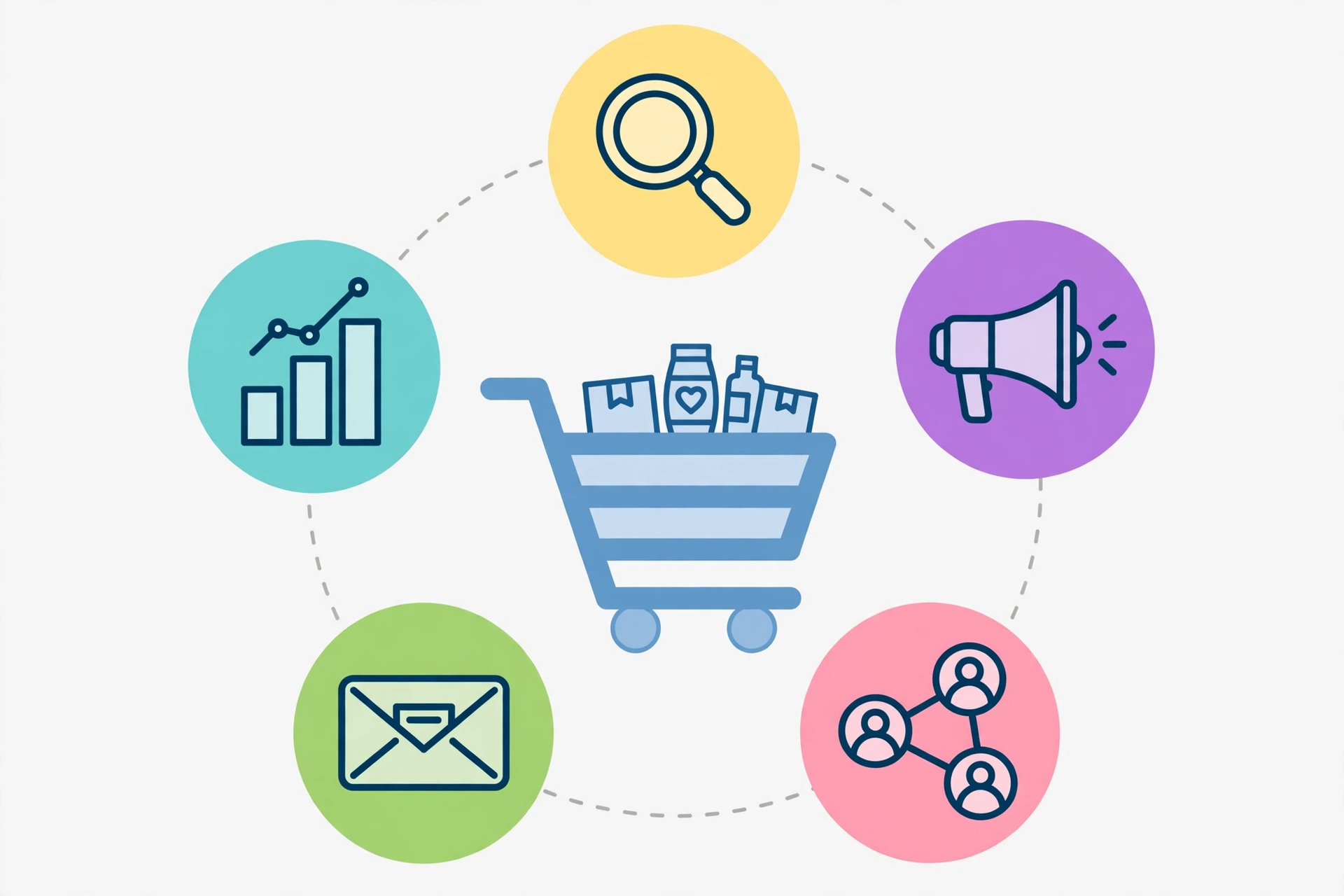
Search engine optimization (SEO)
SEO helps product, category and guide pages rank for buying intent queries, through technical fixes, keyword research, product copy and internal linking. It builds slowly but compounds. See the CPN Tech guide on what is SEO.
Paid search and paid social
Paid media buys attention where shoppers already are: Google Shopping and search ads for high intent queries, and Meta, TikTok, Pinterest or YouTube ads for discovery. The agency tests creative and audiences, manages feeds and budgets, and reports on cost per order. It is the fastest way to test a store, and the easiest place to waste money if margin is ignored.
Email and SMS marketing
Email and SMS are the retention engine of most stores, covering welcome, abandoned cart, post-purchase, back in stock and win-back flows. A strong agency segments by purchase history, tests offers, and respects consent rules. This channel often delivers the highest return, because it speaks to past buyers and warm prospects.
Conversion rate optimization (CRO)
Conversion rate optimization improves the share of visitors who buy, through product page tests, clearer pricing and shipping information, better photography and reviews, simpler checkout, and bundle offers. Lifting conversion from 1 percent to 1.5 percent increases orders by half from the same traffic, without more ad spend.
Content, influencer and marketplace work
Content covers buying guides, comparisons, videos and social posts that build trust before purchase. Influencer work adds seeding and user generated content for reuse in ads. Marketplace services cover listings and advertising on Amazon, Walmart or Target, so the marketplace and direct store support each other, not compete on price.
Analytics and AI search visibility
Good reporting is a service in itself: purchase tracking, revenue dashboards by channel, and analysis of what changed and why. In 2026 it also includes AI search visibility, so product information, reviews and FAQs are structured for AI assistants to cite accurately.
How is an ecommerce marketing agency different from a general agency?
A general agency may serve law firms, restaurants, software companies and stores with similar methods. An ecommerce agency is built around a different unit: the order. A lead agency celebrates form fills, while an ecommerce agency must care about cart value, shipping, returns, discounts and repeat orders, because those decide profitability.
Three differences matter most. First, platform knowledge: Shopify, WooCommerce, BigCommerce and Magento behave differently. Second, testing speed: stores need weekly tests of angles, offers and creative, not quarterly campaigns. Third, measurement: a good agency reports revenue, margin and customer value, and will say when strong clicks still failed because buyers never returned.
A freelancer can be right for one clear job, such as managing Meta ads. An agency makes more sense when several channels must move together. Check who actually works on your account.
How much does an ecommerce marketing agency cost in 2026?

Small to mid-sized stores commonly pay 3,000 to 10,000 dollars per month for a focused retainer, according to the pricing breakdown published by Stryde and cited in recent buyer guides. Larger brands running SEO, paid ads and email together often pay 15,000 to 50,000 dollars per month or more. Single channel work costs less: SEO retainers commonly start around 2,500 dollars per month, and social media management can run from 1,000 to 7,000 dollars depending on platforms and volume.
| Pricing model | How it works | Typical range in 2026 | Watch out for |
|---|---|---|---|
| Monthly retainer | Fixed fee for agreed scope each month | 3,000 to 10,000 dollars for small to mid-sized stores | Scope creep, junior staff, vague deliverables |
| Percentage of ad spend | Fee tied to budget, often 10 to 20 percent | 1,000 to 5,000 dollars flat, or 10 to 30 percent of spend | Incentive to raise spend even when returns fall |
| Project fee | One-off fee for a defined job | Varies widely by project size | Unclear ownership after handover |
| Performance or hybrid | Base fee plus bonus tied to agreed results | Base plus bonus on revenue, MER or growth targets | Attribution disputes when channels share a sale |
These figures usually exclude ad spend, photography, influencer fees, apps and software, so ask for a total monthly cost. A quote below 3,000 dollars per month for full service work should prompt questions about scope and staffing.
When should you hire one, and when should you not?
Hire an agency when you need several channels running well immediately and cannot recruit three or four specialists. This is common after product market fit, when demand is proven but growth has stalled, or before a major launch or seasonal peak. Hire when numbers show a clear bottleneck, such as conversion below 1 percent with healthy traffic, or paid costs rising faster than order value. An agency should name that bottleneck in an audit first.
Do not hire yet if the store has no proven product, no margin to fund marketing, or no one on your side to review reports. An agency cannot fix a product nobody wants, or profitably advertise one priced below its true cost after shipping, fees and returns. Fix pricing, pages and fulfilment first, or hire a consultant for a short audit. Also pause if you cannot commit to three to six months for SEO and retention.
How do you choose the right ecommerce marketing agency?
First, check ecommerce experience. Ask for case studies in your category or price point, with real revenue, order and margin numbers, not only traffic or logos. Ask which platforms the team has built for, who works on your account daily, and how many other accounts they handle.
Second, test measurement thinking. A strong agency will ask for contribution margin, break-even return on ad spend, and acquisition cost payback period before touching your ad account. It will report Marketing Efficiency Ratio, total revenue divided by total marketing spend, alongside platform return, because platform numbers alone can flatter a losing campaign.
Third, demand reporting transparency: a sample report showing revenue, spend, orders, average order value, conversion and repeat rate by channel, plus what changed and what happens next. Vague PDFs with only impressions and clicks are a warning sign. Fourth, read the contract: term, notice period, ownership of accounts, creative, lists and data, and exit terms. Prefer short terms with a clear exit clause over a twelve month lock-in.
Red flags include guaranteed rankings or returns, no sample report, no named team, pressure to raise ad spend in month one, and case studies that never mention margin or repeat orders. Ask: What would you stop first, and why? Which channel would you test first? When do you pause a campaign? What does a bad month look like?
What should the first 90 days look like?
The first two weeks should be discovery: a unit economics audit covering acquisition cost, average order value, conversion, repeat rate and channel mix, plus a teardown of the store, ad accounts and email flows, and tracking confirmation. Weeks three to four should produce a strategy: channel mix, conversion roadmap, retention plan, AI visibility plan and margin targets, with agreed metric definitions.
Weeks five to twelve should be build and launch: conversion fixes first, email and SMS flows built, tracking confirmed, and paid campaigns structured around margin, not clicks. By day 90, you should have a trusted baseline, one tested improvement per core channel, and a clear next quarter plan. Small stores can use a lighter version: an audit, one or two email flows, top ten page fixes, and one paid channel done well. For small store tactics, see the CPN Tech small business SEO guide.
How do you measure whether the agency is working?
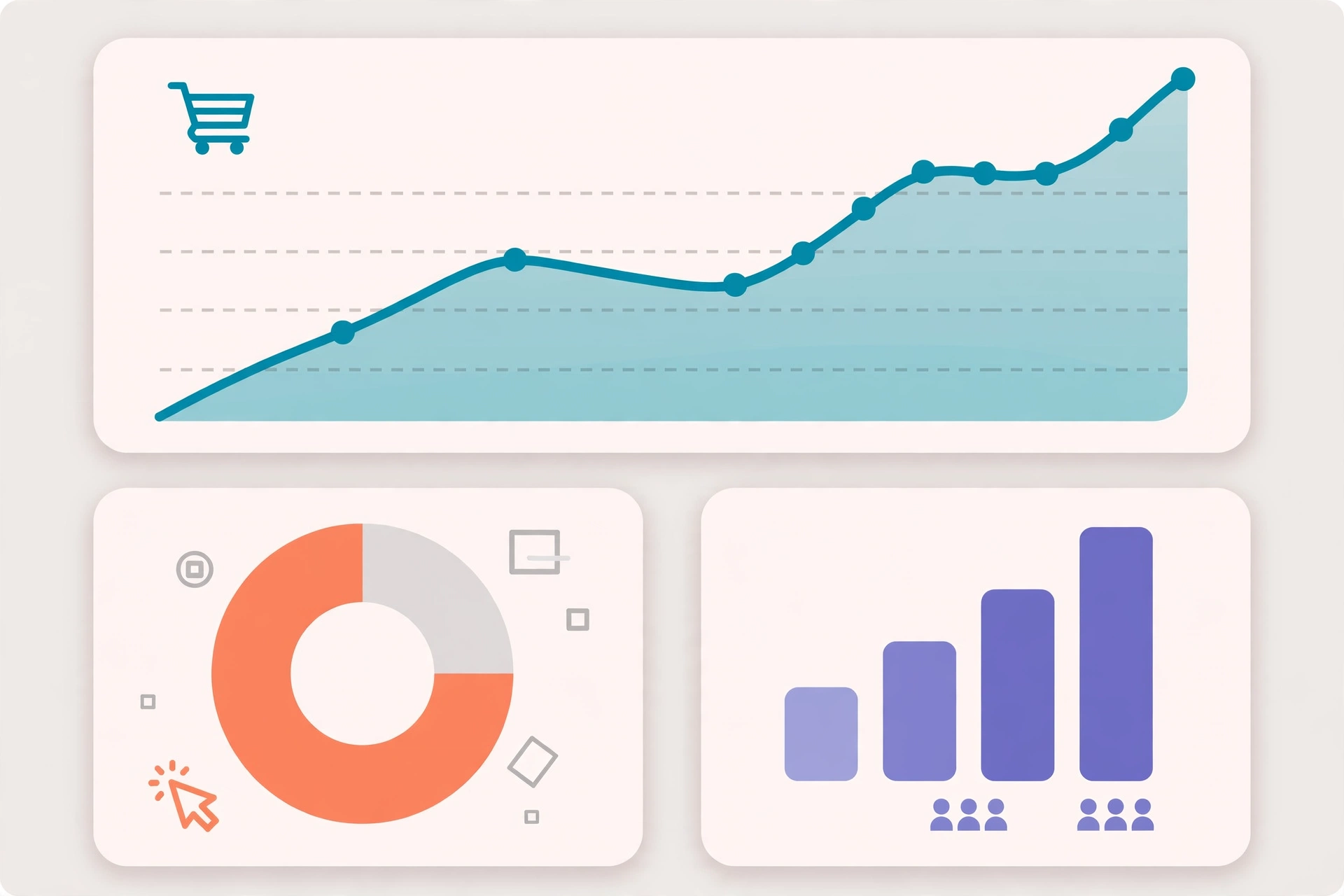
Judge five numbers together, monthly. Customer acquisition cost (CAC) is spend divided by new customers acquired. Lifetime value (LTV) is average revenue, or better, gross profit per customer. If CAC exceeds what a customer returns, scaling ads only scales the loss. Marketing Efficiency Ratio (MER) is total revenue divided by total marketing spend: a Meta return of 4.0 means little if blended MER is only 1.2. Conversion rate, repeat purchase rate and average order value complete the picture.
Set realistic expectations. Industry data cited by the Baymard Institute puts average cart abandonment near 70 percent, and paid conversion for many stores sits near 2 percent, so a credible agency talks about recovering carts and growing repeat orders, not eliminating abandonment overnight. Ask for a monthly narrative: what was tested, what was learned, what changed, and what changes next month.
What mistakes do store owners make when hiring an agency?
Hiring on price alone is the most common mistake: the cheapest retainer can become the most expensive if it brings traffic that does not convert. Compare scope, team, reporting and exit terms, not only the fee. Handing over strategy entirely is another mistake, because an agency needs your knowledge of margins, best sellers, returns and seasonality; keep a weekly check-in during the first quarter.
Judging too early, or on the wrong metric, also misleads: pausing SEO after one month, or celebrating clicks while margin falls, both misread the system. Agree on a review date, metrics and decision rule before launch. Finally, do not let channels compete: use one plan, one dashboard and one margin target. Affiliate partnerships can add reach, and beginners can learn the basics from the CPN Tech guide to affiliate marketing for beginners before adding that channel to a brief.
Frequently asked questions
What does an ecommerce marketing agency do day to day?
An ecommerce marketing agency plans campaigns, manages paid and organic channels, builds email and SMS flows, tests product pages and creative, and reports on revenue and margin. Day to day work includes budget checks, creative testing, feed and listing fixes, email sends, and analysis of which products, audiences and offers produced profitable orders.
How much does an ecommerce marketing agency cost for a small store?
A small store commonly pays 3,000 to 10,000 dollars per month for a focused agency retainer, plus ad spend and tool costs. Single channel help, such as SEO or email alone, often starts near 2,500 dollars per month. Always ask for the total monthly cost, including ad spend, photography, apps and any separate creative or reporting fees.
Is an ecommerce marketing agency worth it?
An agency is worth it when it improves margin, repeat purchase rate and sustainable revenue faster than hiring in-house would, and when you can measure that improvement. It is not worth it if the product has no margin, the store has no proven demand, or nobody on your side reviews reports and acts on them.
How long does it take to see results from an ecommerce marketing agency?
Paid ads can show directional results within weeks, while SEO, email list growth and repeat purchase behaviour usually need three to six months. A credible agency will set different timelines per channel, report early learning from paid tests, and avoid promising fast SEO rankings or guaranteed returns.
Should I hire an agency or build an in-house team?
Hire an agency when you need several channels working well at once and cannot recruit that breadth quickly. Build in-house once one channel dominates your revenue and justifies a full-time specialist, or when brand knowledge matters more than channel breadth. Many stores start with an agency, then hire in-house for their strongest channel.
What should I ask before signing with an ecommerce marketing agency?
Ask for case studies with revenue and margin numbers, a sample report, the names and seniority of your team, and a clear exit clause. Ask how the agency measures MER and CAC payback, what it would stop doing first, and who owns your ad accounts, creative and customer data if you leave.
Conclusion
An ecommerce marketing agency is not a shortcut to sales. It should make your whole selling system stronger: better visibility, a store that converts, ads measured against margin, and emails that bring customers back. The best agencies talk about margin, repeat rate and Marketing Efficiency Ratio before clicks, and show their working in clear reports.
Before you sign, define your bottleneck, margin and success measures, then compare agencies on the same questions. Ask for a first 90 days plan, a sample report and a workable exit clause. With those in place, an agency can turn a store that gets traffic into a business that keeps profitable customers.