

How to Start an Affiliate Marketing Website
An affiliate marketing website is a site you own that earns commission by recommending products and sending readers to a merchant through a tracked link. If a reader clicks your link and buys, or completes the action the program pays for, the merchant pays you. The site itself is the asset: unlike a social account, it keeps ranking, keeps collecting email subscribers and keeps working long after each article is published.
How to start an affiliate marketing website, in short: pick one focused niche you can write about for months, register a clear domain and reliable hosting, build a fast WordPress site with About, Contact, Privacy Policy and affiliate disclosure pages, join two or three relevant affiliate programs, publish honest reviews and guides answering real buyer questions, place links naturally inside helpful content, and track clicks and earnings while you grow traffic with search, social media and email. It is real work spread over time, not a shortcut to passive income, but every step is learnable without coding skills.
Key Takeaways
- An affiliate marketing website is an owned asset that earns commission when readers buy through your tracked links.
- One narrow niche beats a broad general site, because it builds trust, topical authority and repeat readers faster.
- Honest, tested content converts better than aggressive selling, and disclosure protects readers and your accounts.
- Traffic, clicks, conversions and commission together decide earnings, so track all four from the first article.
Table of Contents

- What is an affiliate marketing website?
- How do you get started with affiliate marketing?
- How do you choose a profitable niche?
- How do you build an affiliate marketing program around your site?
- How do you become a marketing affiliate?
- How do you set up the website itself?
- What content should you publish first?
- How do you bring readers to a new site?
- How do you track earnings and grow?
- What mistakes should beginners avoid?
- Frequently Asked Questions
- Conclusion
What is an affiliate marketing website?
An affiliate marketing website is a content site built around one topic where recommendations are part of genuinely useful articles. A typical site mixes reviews, comparison guides, how to articles and buying guides. Each article helps a reader decide, and affiliate links sit inside that help, for example a link to the product reviewed, or to two products compared side by side.
Affiliate marketing is performance based marketing: a merchant rewards an affiliate for each visitor, lead or sale sent. The parties are the merchant, the affiliate, the network or program that tracks sales in some cases, and the customer. Networks such as Amazon Associates, ShareASale, ClickBank and Impact act as middlemen, while other brands run direct programs. A website beats social posts alone because search traffic compounds, you control layout and disclosure, and deep coverage of one niche builds trust with readers and search engines.
How do you get started with affiliate marketing?
How do you get started with affiliate marketing if you have no site, no audience and no experience? Start with the reader, not the product. Write down one person you want to help, one problem they keep searching for, and one decision they struggle with. Examples: a beginner cook choosing a first stand mixer, a new runner choosing shoes for flat feet, or a freelancer choosing invoicing software.
Next, test affiliate potential before spending money. Look for three signs: people search using buyer words such as best, review, versus and alternatives; at least three programs sell products that solve the problem; and you can test or research those products honestly. Then set a launch sequence: week one, niche and domain; week two, hosting and essential pages; week three, program applications and two articles; week four, a third article and an email signup. A domain costs roughly 10 to 15 dollars a year, hosting roughly 3 to 10 dollars a month, and time costs about 5 to 10 hours a week at first.
Affiliate Earnings Calculator
Estimate what an affiliate site could earn per month. Everything runs in your browser.
$0 / month
How do you choose a profitable niche?
A niche is a focused topic area, and choosing well is the highest leverage decision in this guide. A good niche passes five checks: you can write about it for a year, readers search for products in it, programs pay a workable commission, competition leaves a gap you can fill, and the topic fits program rules.
Start with what you know, then validate with demand. List ten topics you have real experience in, from work, hobbies or problems you solved yourself. Search buyer phrases for each and note whether results are thin, outdated or generic. A gap is a place where articles miss comparisons, skip downsides or fail to answer a specific question. Target those gaps, not a broad topic such as all technology, and not a single product model. Aim for one audience and dozens of related products, for example espresso gear for home beginners.
How do you build an affiliate marketing program around your site?
How do you build an affiliate marketing program around your site when you are the affiliate, not the merchant? You build your own partner system: a small set of programs, a link management habit, a content structure that connects them, and a tracking routine. Merchants build programs to recruit affiliates; you build a portfolio that serves one reader.
Start by joining two or three programs, not twenty. For each, record the commission rate, whether it is one time or recurring, the cookie length, the payout threshold and method, and rules about disclosure and trademarks. A program paying 30 percent once on a 20 dollar product may earn less per sale than one paying 10 percent recurring on a 50 dollar a month tool, so compare earnings per reader, not just the percentage. Organise links from day one in a plugin or spreadsheet, and structure the site as a hub page linking to comparisons, reviews and how to articles.
How do you become a marketing affiliate?
How do you become a marketing affiliate in practice? You apply to a program, prove you have a real site, and agree to its terms. Most programs ask for your website URL, traffic sources, promotional methods and sometimes tax or payment details. Some approve instantly, while others review manually and may ask for a published site with real content first, which is why a few honest articles before applying often improve approval odds.
Amazon Associates is a common first program, but it has strict rules and a short cookie window, and accounts can close if no qualifying sales arrive within the first 180 days. ShareASale, Impact and CJ Affiliate host many brands in one dashboard, while ClickBank focuses on digital products. If an application is rejected, fix the likely gap, publish three to five more useful articles, and reapply after a few weeks. Never misrepresent traffic or buy fake clicks. Disclosure is required: put a short disclosure near the top of any post with affiliate links.
How do you set up the website itself?
Setting up the site should take days, not months. First, choose a domain name that is short, easy to spell, free of trademarks and relevant to your niche without boxing you in. A name tied to one product model will feel wrong when you expand, while a name tied to the audience and problem will grow with you.
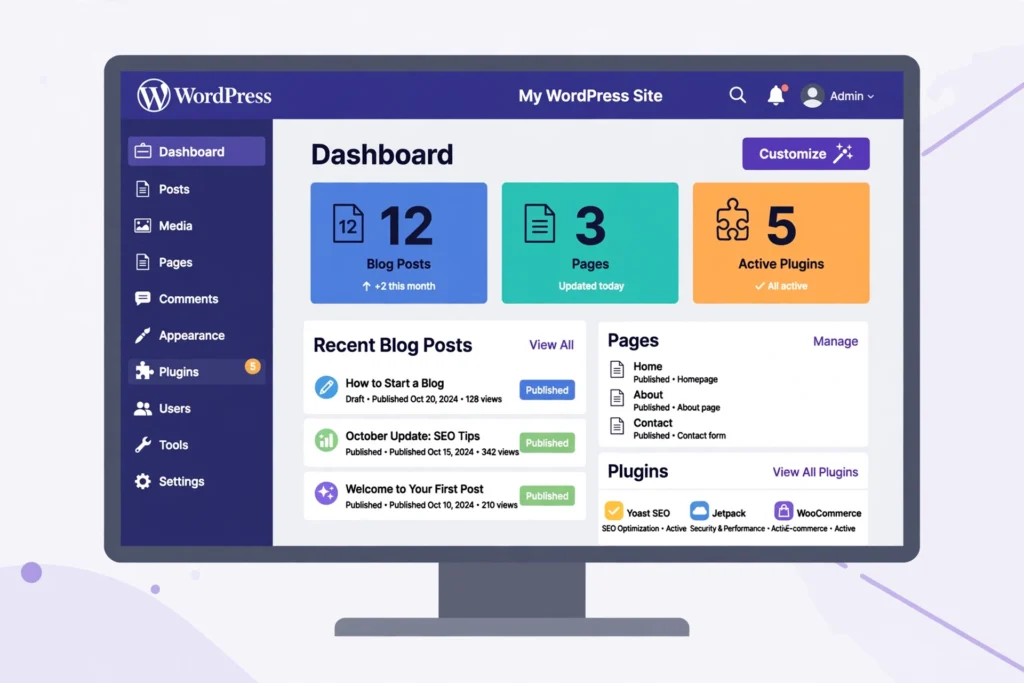
Next, choose hosting and install WordPress. Self hosted WordPress, the software from WordPress.org installed on your own hosting, is the most common choice because it gives full control over themes, plugins, links and data. Most hosts offer one click installation, and you should choose the post name permalink structure in Settings, Permalinks before publishing. Pick a fast, mobile friendly theme such as Kadence, Astra or GeneratePress, install only needed plugins (security, backup, SEO, caching, link management), and publish five essential pages: homepage, About, Contact, Privacy Policy and Affiliate Disclosure, plus an email signup form.
What content should you publish first?
Your first ten articles should form a connected library, not ten random posts: one hub guide covering the whole niche decision, supported by comparisons, reviews and how to articles that link back to it. A practical first ten map: (1) hub guide for beginners; (2) best overall comparison of the top five products; (3) budget comparison; (4) premium comparison; (5) versus article on the two most searched products; (6) single product review based on real testing; (7) second review for the main alternative; (8) how to article solving a common setup problem; (9) mistakes to avoid; (10) frequently asked questions article.
Write reviews a reader can act on: state who the product suits and who should skip it, list real pros and cons, and note what you tested or could not verify. Generic praise with no downsides reads as advertising and converts poorly. Target one primary keyword per article, answer it in the first paragraph, and link to related articles. A detailed guide lives in the related article on how to do SEO and in the SEO tips article.
How do you bring readers to a new site?
New sites rarely rank on day one, so plan three traffic sources from the start: search, social and email. Search is the long term engine: publish consistently, target questions with clear intent, and give each article time, often three to six months, to climb. Social media brings the first readers while search warms up: share each article where your audience already discusses the niche, answer questions there without spamming links, and turn one article into a short video or checklist pointing back to the full guide.
Email deserves attention from the first article. Offer a useful free resource, such as a buying checklist, in exchange for an email address. A small engaged list beats a large list that never opens anything. Paid ads are optional and risky for beginners: if you try them, send traffic to a helpful article, track cost per click against commission earned, and stop any campaign that loses money after a fair test.
How do you track earnings and grow?
Affiliate earnings follow a simple chain: visitors multiplied by click through rate multiplied by conversion rate multiplied by average commission equals earnings. For example, 10,000 monthly visitors with a 5 percent click rate, a 3 percent conversion rate and a 25 dollar average commission gives about 375 dollars a month. Better content raises click rate, better product fit raises conversion, and a higher value program raises commission. Use the calculator in this article to test your own numbers before setting income goals.
Track four dashboards weekly: analytics for visitors, affiliate dashboards for clicks and earnings per click, search console for rankings, and email for subscribers. Look for patterns, not single days: articles earning clicks but not sales may need a stronger product match, while articles with sales but low traffic deserve promotion. A monthly review updating the top five earning articles and fixing broken links does more than publishing a new thin article every day.
What mistakes should beginners avoid?
The most common beginner mistakes are all avoidable. Publishing thin reviews copied from merchant descriptions adds nothing and rarely ranks. Promoting products you have not researched, or would not recommend to a friend, destroys the trust the whole site depends on. Hiding affiliate links, or burying disclosure in a footer only, risks program bans and reader complaints. Chasing every niche at once, or joining twenty programs in week one, spreads effort so thin that no section becomes authoritative.
Technical mistakes matter too. A slow site loses readers before they read a review, so compress images, keep plugins minimal and check mobile layout on a real phone. Broken affiliate links lose sales silently, so check links monthly. Duplicate content, keyword stuffing and exaggerated income claims hurt rankings and credibility. Finally, quitting at month two is the mistake that makes all others permanent: sites usually need three to six months of consistent publishing before search traffic becomes meaningful.

Frequently Asked Questions
How long does it take to start an affiliate marketing website?
A basic site can go live in a weekend. Earning regularly usually takes three to six months of consistent publishing, because search traffic grows slowly and readers need several strong articles before they trust recommendations.
How much does it cost to start an affiliate marketing website?
A beginner launch typically costs a domain and shared hosting, roughly 50 to 150 dollars in the first year, plus your time. Premium themes and paid plugins are optional upgrades.
Do you need a website to do affiliate marketing?
No, you can promote links on social media, video or email, but a website gives you an asset you own, search traffic that compounds, and room for detailed comparisons that short posts cannot hold.
How do you get started with affiliate marketing with no audience?
Publish search focused content answering buyer questions, share each article where your niche audience already gathers, and build an email list from day one.
How do you become a marketing affiliate without experience?
Apply to programs fitting your niche once you have a live site with a few honest articles, a disclosure page and a privacy policy. Start with two or three programs and follow their rules exactly.
Can you start an affiliate marketing website for free?
Free platforms exist, but they limit themes, plugins, monetisation and ownership, and some programs reject free hosted sites. A low cost self hosted site is usually better, because you control links, data and design.
How much can an affiliate marketing website earn?
Earnings vary widely by niche, traffic, conversion rate and commission. A small site may earn tens of dollars a month at first, while an established site in a high value niche can earn thousands. Treat any guaranteed income promise as a warning sign.
Conclusion
How to start an affiliate marketing website comes down to a sequence anyone can follow: choose one niche you can serve honestly, build a fast site with the essential trust pages, join a small set of fitting programs, publish a connected library of reviews and guides, disclose every affiliate relationship clearly, and keep improving based on real traffic and earnings data. None of these steps needs coding skill or a large budget, but all need patience and consistency.
Start this week: name your reader, test your niche against the checks in this guide, and register a domain you can grow into. Then publish your first genuinely helpful article, add your disclosure, and keep going.
Readers who want the beginner foundations behind this guide can start with the affiliate marketing for beginners article, and small business owners can apply the same search principles through the small business SEO guide. For a broader view of how this site covers technology simply, visit the CPN Tech homepage.