4 Ps of Marketing: A Simple Guide to the Mix
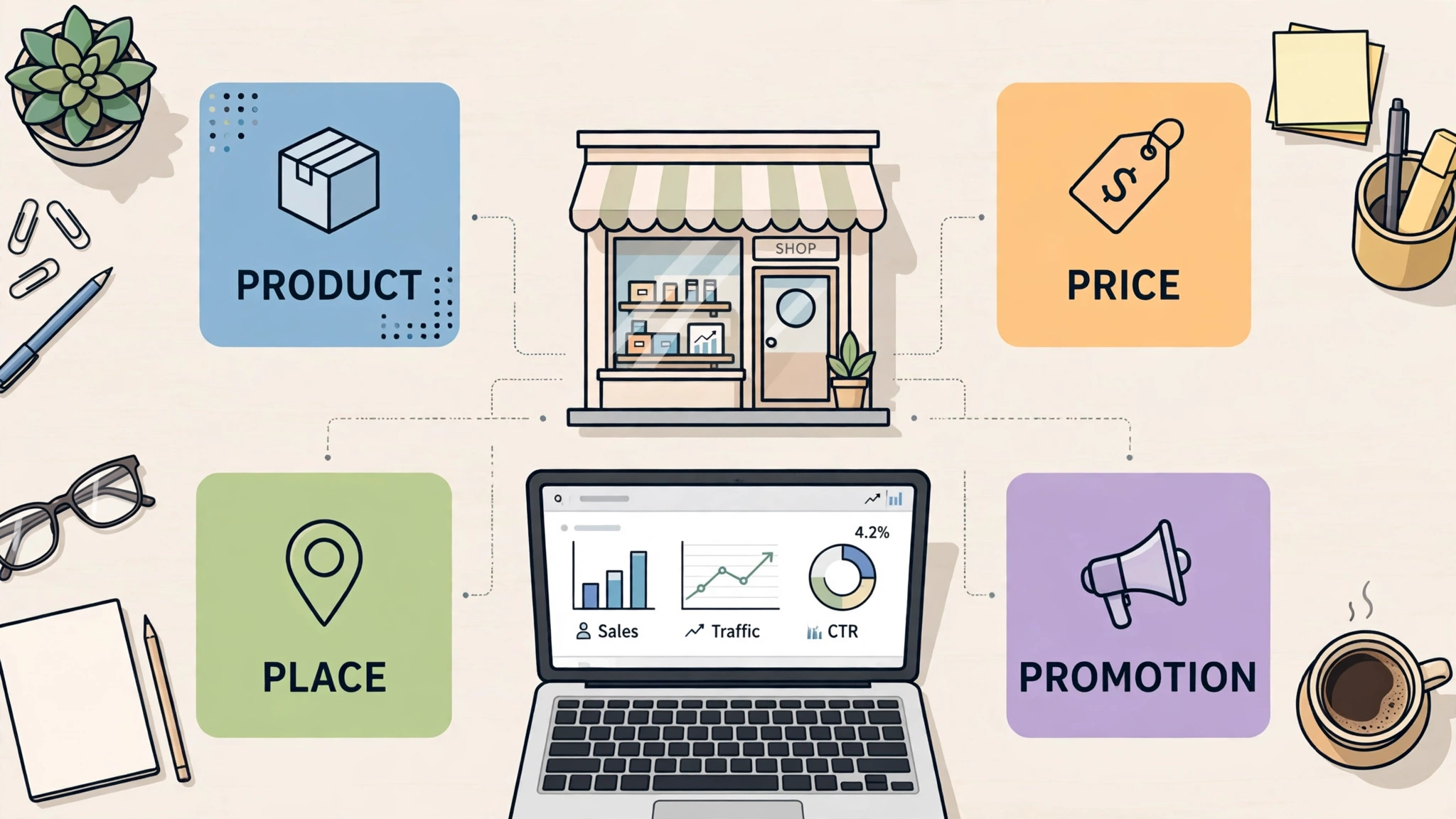
The 4 Ps of marketing are product, price, place, and promotion. Together they form the marketing mix: the four controllable decisions a business makes to bring an offer to market and to match it to the people most likely to buy it. If you are launching a product, fixing slow sales, or planning your first real marketing budget, the 4 Ps give you a checklist that is simple enough to use in an afternoon and serious enough to run a business on.
In short, the 4 Ps of marketing are the four choices every seller must align: what you sell (product), what you charge (price), where customers can buy it (place), and how you tell them about it (promotion).
Key Takeaways
- The 4 Ps of marketing are product, price, place, and promotion, together called the marketing mix.
- No single P wins alone: a premium price needs premium quality, suitable places to buy, and promotion that explains the value.
- Place now includes online stores, marketplaces, app stores, and social commerce, not only physical shops.
- Use 7 Ps for services with heavy human contact, and 4 Cs when you want to check the mix from the buyer’s side.
Contents
- What are the 4 Ps of marketing?
- What does product mean in the marketing mix?
- How should a business set price?
- What does place cover in a digital world?
- How does promotion turn attention into sales?
- How do the 4 Ps work together in a real example?
- Should you use the 4 Ps, the 7 Ps, or the 4 Cs?
- What mistakes break a marketing mix?
- How can a small business audit its 4 Ps in one week?
- How do you measure each P?
- Frequently asked questions
- Conclusion
What are the 4 Ps of marketing?
What are the 4 Ps of marketing, and why have they lasted for more than sixty years? The 4 Ps of marketing are a framework for the marketing mix: product, price, place, and promotion. Harvard professor Neil Borden popularised the idea of a marketing mix in the 1950s, and marketing professor E. Jerome McCarthy refined it into four clear categories in his 1960 book Basic Marketing: A Managerial Approach. The framework survived because it matches the questions every seller faces: what am I selling, what does it cost, where can people get it, and how will they hear about it?
A low price can drive trial, but it limits what you can spend on promotion and service. The skill is choosing four settings that tell one consistent story to one specific customer.
What does product mean in the marketing mix?
What does product mean in the marketing mix? Product means the complete offer a customer buys, not only the physical item. Product covers features, quality, design, packaging, branding, sizes or variants, warranties, and any service wrapped around the purchase, such as setup help or after sales support. A customer rarely buys features alone. A customer buys the outcome those features promise, plus the confidence that the promise will hold.
Start product decisions with the customer’s problem, not with your catalogue. Ask what job the customer is hiring your product to do, what alternatives they already use, and what would make them switch. A handmade soap maker, for example, is not only selling soap. The maker is selling gentle ingredients, a scent that suits sensitive skin, plastic free packaging, and a small daily ritual.
How should a business set price?
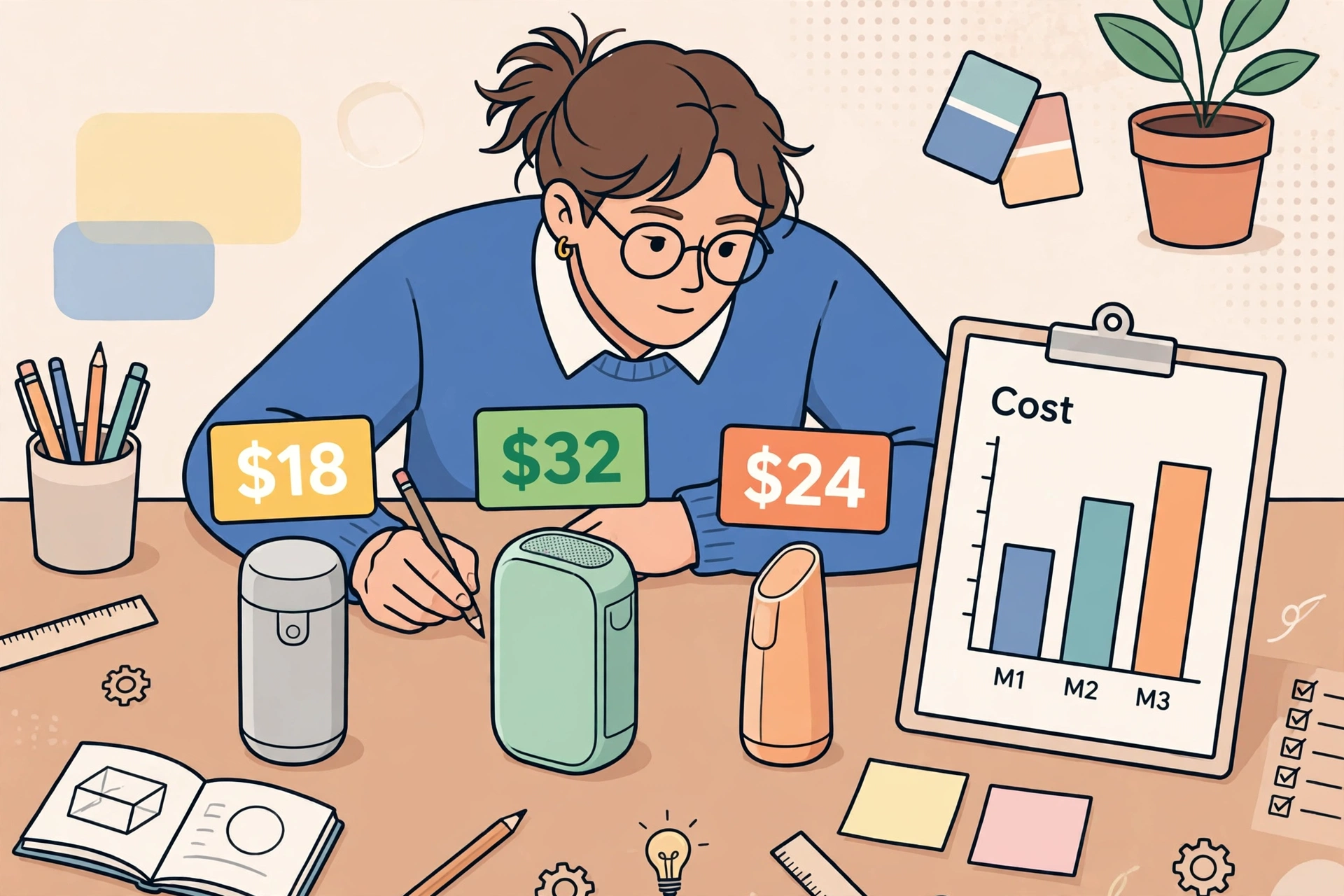
How should a business set price? Price is the amount a customer pays, and it is also a signal about quality, positioning, and who the product is for. A price too high for the value on offer will stall sales. A price too low can starve the business of profit, limit promotion, and even make buyers doubt the quality. Good pricing starts with costs, checks competitors, and then tests what customers will actually pay.
There are three common starting points. Cost based pricing adds a margin to production, delivery, and overhead costs, which keeps the business solvent but can ignore what buyers value. Competitor based pricing matches or slightly undercuts rivals, which helps in crowded markets but can trigger a price war nobody wins. Value based pricing sets price from the outcome for the customer, which works best when the benefit is clear, such as time saved. Most small businesses use a blend: cover costs first, study competitors second, and adjust toward value as proof grows.
What does place cover in a digital world?
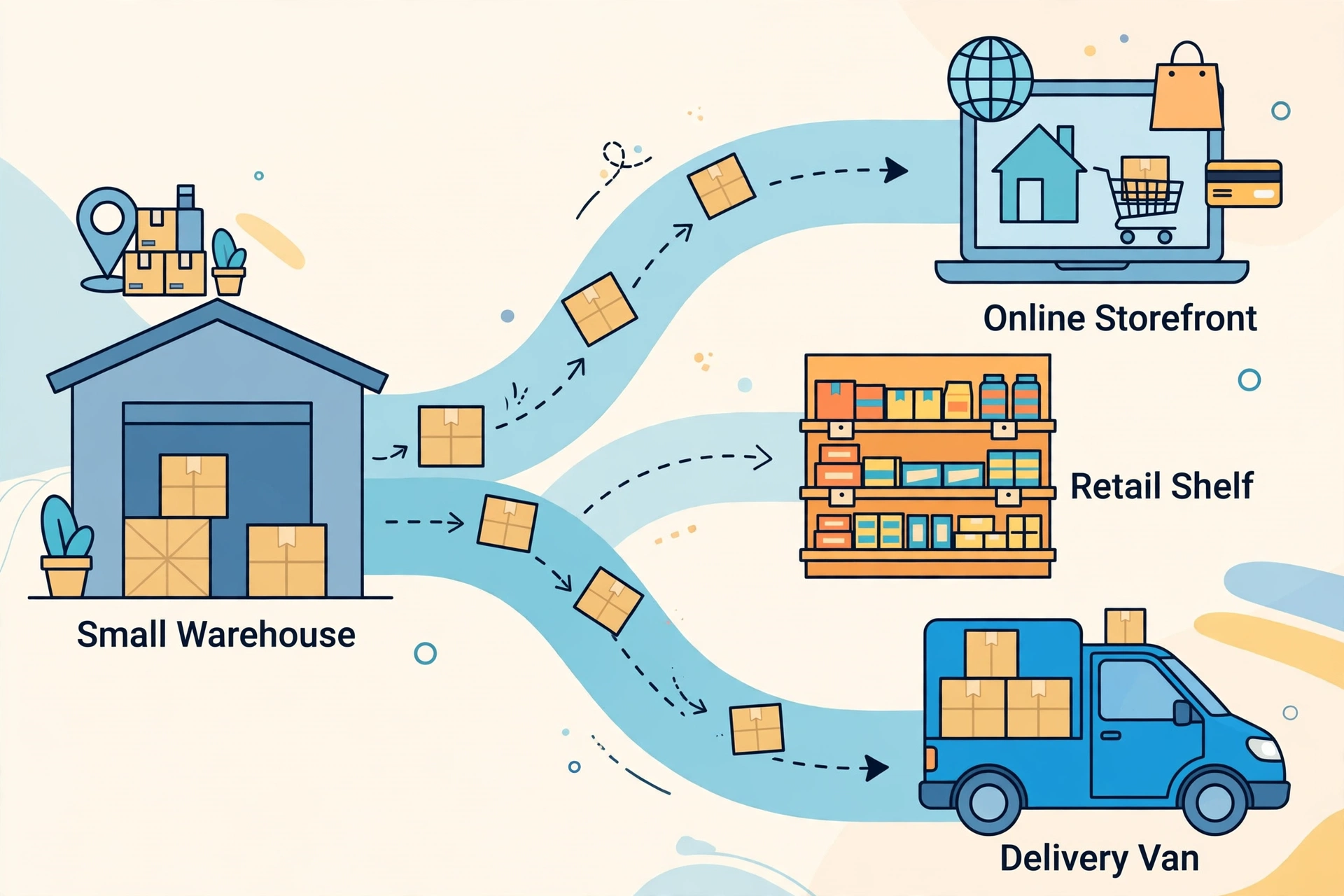
What does place cover in a digital world? Place means every channel through which customers discover, evaluate, and buy your product, plus the logistics that get it to them in good condition and on time. In the past, place mostly meant shops, distributors, and shelf space. Today place also means your own website, online marketplaces, social storefronts, app stores for digital products, and the delivery partners that complete the order. For many small businesses, place is now the difference between being found and being invisible.
Choose places by following your customers, not by chasing every channel at once. A handmade soap brand might sell best through its own website for repeat buyers, a marketplace for discovery, and a local market stall for sampling and trust. Each place has a cost: fees, shipping complexity, returns handling, and less control over presentation. One well run channel usually beats three neglected ones. For help with the search side of being found, see our small business SEO guide.
How does promotion turn attention into sales?
How does promotion turn attention into sales? Promotion covers every activity that communicates value and moves a customer toward purchase: advertising, content, social media, email, search visibility, public relations, events, and sales conversations.
Start with the message before the channel. A strong message names the customer, the problem, the outcome, and the proof, in that order. “Gentle soap for sensitive skin, made with simple ingredients and reviewed by thousands of happy customers” works because it is specific. A vague claim such as “the best soap ever” asks the buyer to trust you without a reason. Then match the channel to the journey stage. Search visibility helps when customers already know what they want; if that concept is new, start with what SEO is. Social content helps when customers do not yet know your brand. Email suits people who already trust you, for launches and repeat purchases. Affiliate partnerships can extend reach without upfront ad spend, as explained in our guide to affiliate marketing for beginners.
How do the 4 Ps work together in a real example?
How do the 4 Ps work together in a real example? Consider a fictional small business, Lumen Soap, a handmade soap brand run by one founder. Lumen’s target customer is a buyer with sensitive skin who reads ingredient labels and prefers plastic free packaging. That single customer profile drives all four Ps.
Product: three gentle bars (unscented, oat, and lavender), a refill bundle, and a subscription box, with full ingredients on paper wrapped packaging. Price: a mid range price covering small batch costs, with a lower per bar price for subscribers and a bundle discount that still protects margin. Place: the brand’s own website for subscribers, a large marketplace for discovery, and a monthly local market for sampling. Promotion: short videos showing the soap being cut and lathered, search optimised pages for sensitive skin terms, an email first order guide, and reviews on product pages. Notice the alignment: the mid range price matches the premium, plastic free story, while a bargain price would contradict it.
Should you use the 4 Ps, the 7 Ps, or the 4 Cs?
Should you use the 4 Ps, the 7 Ps, or the 4 Cs? The 4 Ps are enough for most product businesses, but two extensions help in specific cases. The 7 Ps add people, process, and physical evidence, and they matter most for services, where the experience is the product. The 4 Cs reframe the same decisions from the buyer’s side: consumer, cost, convenience, and communication. Use the framework that exposes your blind spot, not the one with the most letters.
For services, the 7 Ps are often the better checklist. People covers staff skill, attitude, and training, because a rude or untrained team can undo good advertising. Process covers booking, onboarding, delivery, and support steps, because a confusing process creates complaints even when the core service is strong. Physical evidence covers everything tangible that signals quality: a clean studio, a clear proposal, a professional invoice, or a well designed app screen. The 4 Cs are a useful second pass: consumer asks whether the product solves a real want, cost includes time and effort as well as money, convenience covers delivery and support, and communication asks whether the brand listens, not only broadcasts.
What mistakes break a marketing mix?
What mistakes break a marketing mix? Most broken mixes fail in predictable ways, and each failure traces back to one P contradicting another. The first mistake is promoting a product that is not ready: advertising drives traffic to a confusing page or a checkout that fails on mobile, which wastes money and teaches buyers to ignore you. Fix product and place before you scale promotion. The second mistake is pricing for applause instead of profit: constant discounts and free shipping on every order can grow sales while shrinking the business, so track profit per order alongside revenue.
The third mistake is choosing place by habit. Selling only through one shop or one marketplace leaves you exposed to its fees and rule changes, while selling everywhere at once spreads you thin and serves no channel well. The fourth mistake is a message that does not match the buyer, such as jargon for beginners or luxury language for bargain hunters. Write promotion from the customer’s own words, taken from reviews and support messages.
How can a small business audit its 4 Ps in one week?
How can a small business audit its 4 Ps in one week? A one week audit works because it forces one decision per day, with a decision day at the end. You need sales data, a few customer reviews, your price list, and an honest look at your own buying path.
Day 1, product: list your top five and slowest sellers, read ten recent reviews and ten support messages, and decide one product change, such as clarifying a description or retiring a variant that only adds complexity. Day 2, price: list every price, discount, fee, and shipping cost, calculate profit per order for your top three products, and decide one pricing change. Day 3, place: buy your own product on a phone through each channel, note every friction point, and decide one place fix. Day 4, promotion: list last month’s promotion by channel with cost, clicks, and sales, keep the channel that converts, pause the one that only produces attention, and rewrite one weak message in customer language. Day 5, alignment: place the four decisions side by side, fix the single biggest contradiction first, and write the audit on one page with the weakest P, the evidence, the change, and the number you will watch for thirty days.
How do you measure each P?
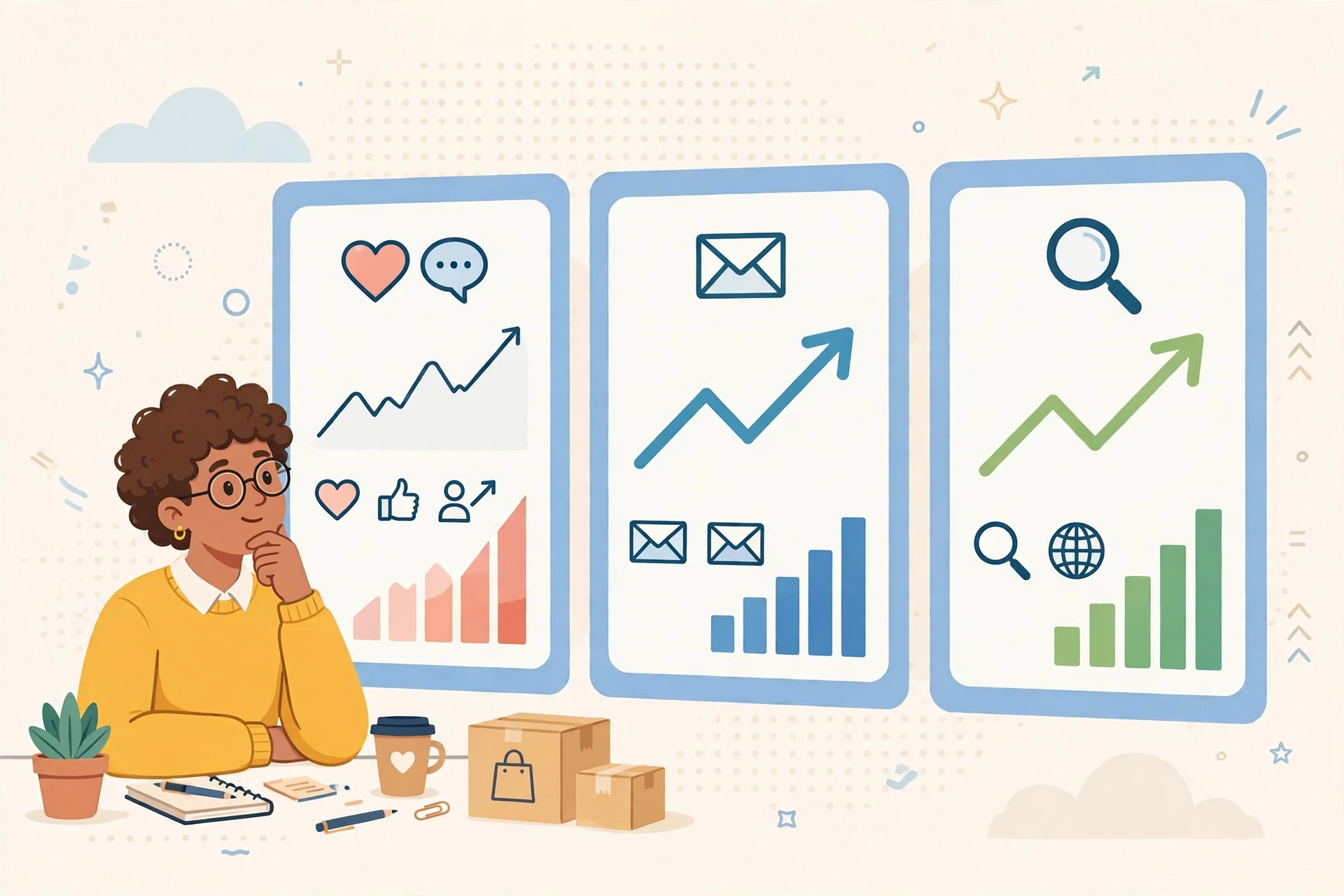
How do you measure each P? Each P needs its own number, because total sales alone cannot tell you which decision failed. Product health shows in repeat purchase rate, review ratings, and return reasons. If repeat purchases fall while new sales hold steady, product quality, not promotion, is the likely problem. Price health shows in profit per order, average order value, and discount share of revenue: if revenue rises while profit per order falls, pricing needs attention.
Place health shows in conversion rate by channel, checkout completion rate, and delivery time. If one channel converts far worse than others, the buying path, not the product, is usually at fault. Promotion health shows in cost per acquisition, email click rates, search visibility for product terms, and assisted conversions, meaning sales where promotion helped even if it was not the last click.
Frequently asked questions
What are the 4 Ps of marketing in simple words?
The 4 Ps of marketing are product, price, place, and promotion. Product is what you sell, price is what you charge, place is where customers buy it, and promotion is how you tell them about it. Together they form the marketing mix.
Who created the 4 Ps of marketing?
Neil Borden popularised the marketing mix concept in the 1950s, and E. Jerome McCarthy refined it into product, price, place, and promotion in his 1960 book Basic Marketing: A Managerial Approach. The framework has since been extended for services and digital marketing.
What is an example of the 4 Ps of marketing?
A handmade soap brand shows the mix clearly: gentle bars with clear ingredients (product), a mid range price with a subscriber discount (price), its own website plus a marketplace and a local market (place), and videos, search pages, and email (promotion). Each choice supports the others.
Are the 4 Ps still relevant in digital marketing?
Yes, the 4 Ps of marketing remain relevant because digital tools change channels, not decisions. Place now includes websites, marketplaces, and app stores, and promotion includes search, social, and email, but a business still needs a strong offer, a fair price, a smooth buying path, and a clear message.
What is the difference between the 4 Ps and the 7 Ps?
The 7 Ps add people, process, and physical evidence to product, price, place, and promotion. The extra Ps matter most for services, where staff, booking and delivery steps, and tangible proof of quality shape what the customer actually experiences.
How do I start using the 4 Ps for my small business?
Start with one customer profile, then answer the four questions in order: what problem does the product solve, what price covers costs and reflects value, where will that customer buy, and what message will reach them. Then run the one week audit in this article and fix the weakest P first.
Conclusion
The 4 Ps of marketing endure because they force a useful discipline: check the offer, the price, the buying path, and the message as one system, for one customer, before spending more on any single part. Product without a fair price will stall. A fair price in a place customers never visit will stay hidden. Promotion for a confusing buying path will waste attention.
Start small and stay honest. Fix the weakest P first, measure the result for thirty days, and repeat the review each quarter. For more practical guides on growing a small business online, explore the articles on CPN Tech and use the mix as the filter for every new marketing idea: if it does not strengthen product, price, place, or promotion for your chosen customer, it can wait.