How to Prevent Identity Theft: 12 Simple Steps
Identity theft can drain your bank account, wreck your credit score, and take months to clean up, yet most of it is preventable with a few habits that take less than an hour to set up. Thieves no longer need to meet you or steal your wallet. They buy leaked passwords, guess weak ones, or trick you into handing over details with a fake email or phone call. The good news is that you can close most of those doors yourself, for free, starting today.
How to prevent identity theft in short: freeze your credit with Equifax, Experian, and TransUnion, guard your Social Security number, use unique passwords with two-factor authentication, check your statements and credit reports regularly, and treat every unexpected message asking for personal details as a scam until proven otherwise.
Key Takeaways
- A credit freeze is the strongest free protection against new accounts in your name.
- Guard your Social Security number: share it only when legally required and never carry the card.
- Unique passwords plus two-factor authentication stop most account takeovers, even if one password leaks.
- Check statements weekly and credit reports regularly, because early detection limits damage.
- No single step stops every type, so layer several habits together.
Table of Contents
- What Is Identity Theft?
- How Does Identity Theft Happen?
- Warning Signs
- 12 Practical Steps
- Freezing Your Credit
- Freeze vs Fraud Alert
- Protecting Your Identity Online
- Protecting Your Identity Offline
- What to Do If Your Identity Is Stolen
- Is Paid Protection Worth It?
- Frequently Asked Questions
- Conclusion
What Is Identity Theft?
Identity theft happens when someone uses your personal information without permission, usually to steal money or open accounts in your name. The information can be your name, date of birth, Social Security number, bank details, or login credentials. A thief might open a credit card, take out a loan, file a fake tax return, claim medical care, or commit crimes while pretending to be you.
The Federal Trade Commission received more than 1.15 million identity theft reports in the first three quarters of 2025 alone, already passing the 2024 total, with credit card fraud the most common category. Javelin reported 27.3 billion dollars in traditional identity fraud losses affecting 18 million victims in its 2026 study.
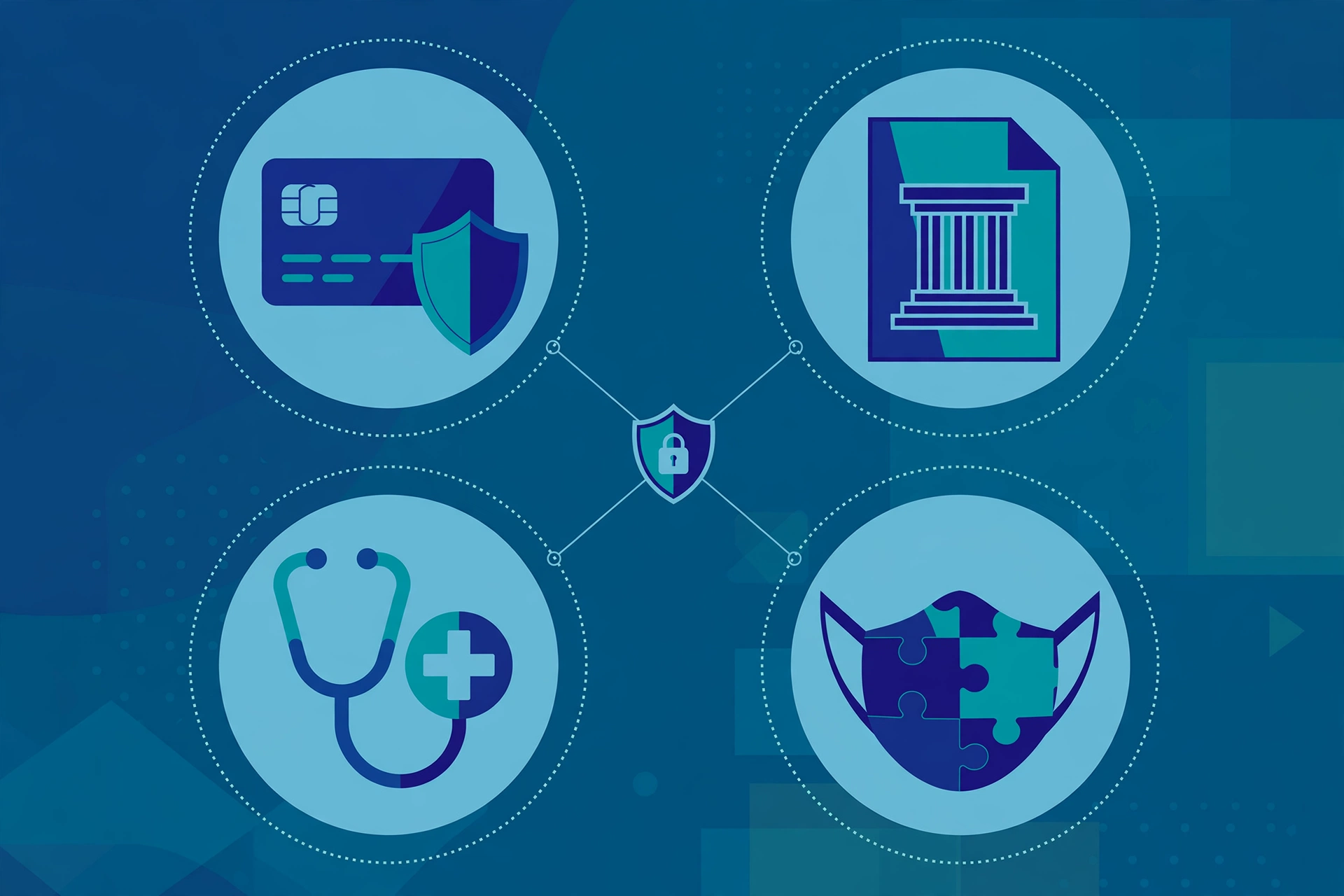
Identity theft takes several forms: financial (new accounts in your name), tax (a fake return claiming your refund), medical (treatment on your insurance), synthetic (a real Social Security number with a fake name), child (a child’s clean number), and criminal (your name given to police).
How Does Identity Theft Happen?
Thieves get your information through surprisingly ordinary channels. Data breaches expose millions of records at once, and stolen details are sold on the dark web. Phishing emails and text messages trick you into typing your password into a fake login page. Phone scammers pretend to be your bank or a government agency and pressure you to share a code.
Public Wi-Fi in cafes, airports, and hotels is another weak point, since logging into your bank on an open network can expose your traffic. Skimming devices on ATMs quietly copy card details. Old-fashioned theft still works too: stolen mail, bank statements pulled from the trash, and a wallet left in a car all hand thieves what they need.
What Are the Warning Signs of Identity Theft?
Catching identity theft early is the difference between a quick fix and a months-long cleanup. Watch for bills or statements that stop arriving, which can mean someone changed your address. Look for small unfamiliar charges, since thieves often test a stolen card with a tiny purchase before a big one.
Other red flags include debt collection calls for accounts you never opened, a rejected tax return, and medical bills for treatment you never received. If a loan application is denied for reasons you do not recognize, or your credit score drops suddenly with no clear cause, check your credit report the same day. If you want to know whether your phone itself has been compromised, read our guide on how to tell if your phone is hacked.
How to Prevent Identity Theft: 12 Practical Steps
1. Freeze your credit
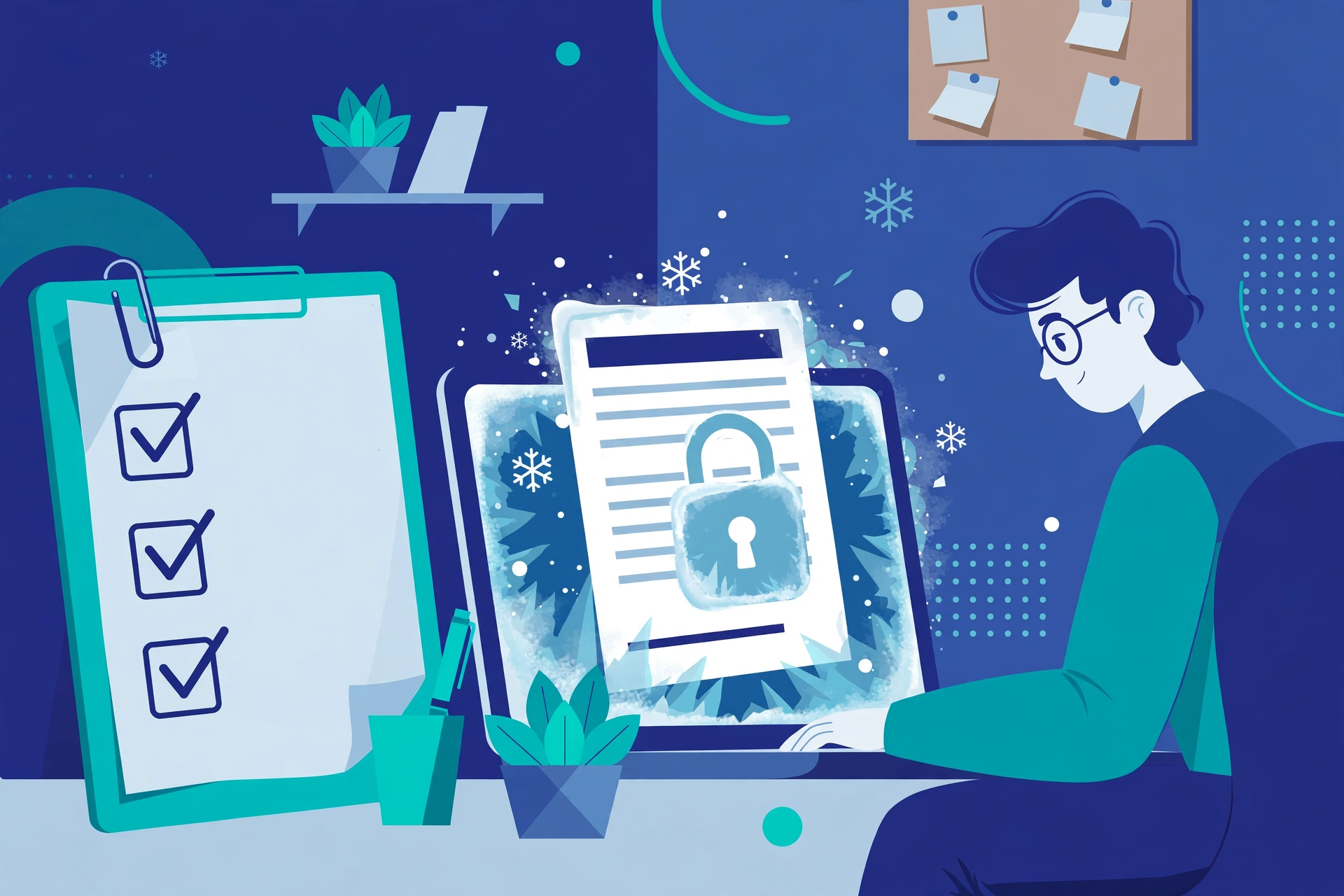
A credit freeze blocks new accounts in your name, even if a thief has your Social Security number. It is free, it never affects your credit score, and you can lift it when you apply for credit.
2. Guard your Social Security number
Your Social Security number is the master key to your identity. Never carry the card in your wallet, and share the number only when legally required. Never send it by email, text, or chat.
3. Use unique passwords and a password manager
Reuse is the biggest password mistake: one leaked password can open every account that shares it. A password manager creates and stores a long, random password for each account, so you only need to remember one strong master password.
4. Turn on two-factor authentication
Two-factor authentication adds a second check after your password, usually a code from an app or text message. A stolen password alone cannot log a thief in.
5. Check statements and credit reports regularly
Review bank and card statements weekly for charges you do not recognize, even tiny ones. Check your credit reports regularly through AnnualCreditReport.com, where weekly reports are free.
6. Treat unexpected messages as scams
Banks, government agencies, and big tech companies never ask for passwords, PINs, or full account numbers by email, text, or phone. If a message pressures you to act now, verify through a channel you trust: type the official website address yourself or call the number on the back of your card.
7. Shred sensitive documents
Bank statements, credit offers, tax records, medical bills, and pay slips all carry details a thief can use. Shred them instead of tossing them in the trash, including pre-approved credit offers.
8. Secure your mail and home network
Collect your mail daily, and ask the post office to hold it when you travel. At home, protect your Wi-Fi with a strong password and WPA2 or WPA3 encryption.
9. Be careful on public Wi-Fi
Avoid banking, email, or shopping on public Wi-Fi unless you must. If you do, use a trusted virtual private network (VPN) to encrypt your traffic, and make sure the sites you visit show HTTPS in the address bar.
10. Limit what you share on social media
Your birthday, hometown, pet names, and family details are common security question answers. Review your privacy settings, limit your friend list to people you know, and avoid posting your full birthday or travel plans.
11. Protect your children and elderly parents
Children are prime targets because their clean Social Security numbers go unchecked for years, so consider freezing your child’s credit. Elderly parents face phone scams, so help them set up call screening and warn them about the grandparent scam.
12. File your tax return early
Tax identity theft is someone filing a return in your name to claim your refund, so file early. If you are a US taxpayer, you can also request an Identity Protection PIN from the IRS, a six-digit code that must be included on your return, which blocks anyone else from filing with your Social Security number.
How Do You Freeze Your Credit?
Here is exactly how to place a credit freeze. Contact each of the three bureaus separately, online, by phone, or by mail. Online is fastest, taking about 10 minutes per bureau, and the freeze takes effect within one minute of an online request.
- Equifax: visit the Equifax website and look for the credit freeze section, or call 1-800-349-9960.
- Experian: visit the Experian website and look for the security freeze section, or call 1-888-397-3742.
- TransUnion: visit the TransUnion website and look for the credit freeze section, or call 1-888-909-8872.
You will verify your identity with your name, address, date of birth, and Social Security number. Each bureau gives you a PIN or login to manage the freeze, so store it in your password manager. Lift the freeze temporarily when you apply for credit, then put it back after approval. A freeze blocks new credit accounts, but it does not protect accounts you already have, and it does not stop tax fraud, medical fraud, or criminal identity theft.
What Is the Difference Between a Credit Freeze and a Fraud Alert?
You can use both at the same time.
| Feature | Credit freeze | Fraud alert |
|---|---|---|
| What it does | Blocks access to your credit report | Asks lenders to verify your identity |
| Cost | Free | Free |
| How long it lasts | Until you remove it | One year, renewable |
| How to place it | Contact all three bureaus separately | Contact one bureau; it notifies the others |
| Effect on applications | Lift it before applying | None, but verification takes longer |
| Best for | Long-term protection for everyone | Short-term warning after a suspected theft |
Choose the freeze first, and add a fraud alert if your information was exposed in a breach.
How Can You Protect Your Identity Online?
Online protection is mostly about reducing what thieves can reach. Use a password manager and two-factor authentication on every important account, starting with your email. Keep your operating system, browser, and apps updated, since updates patch the security holes thieves exploit. Limit the personal details you share on forms and quizzes.
Watch for manipulation: social engineering attacks use urgency, fear, and authority to make you act before you think, so a message saying your account closes in an hour is almost always a scam. Learn more about online safety on the CPN Tech homepage, where our cybersecurity guides cover phishing, passwords, and safe browsing in plain language.
How Can You Protect Your Identity Offline?
Offline habits still matter. Shred documents, collect your mail daily, and keep your Social Security card, passport, and spare credit cards at home, not in your wallet. Carry only the cards you use.
When you dispose of an old phone, computer, or hard drive, wipe it properly first, because deleted files can often be recovered. Use a factory reset plus a secure erase tool for computers, and remove the SIM card and memory card from phones.
What Should You Do If Your Identity Is Stolen?
Act fast. The first 24 hours matter more than anything else, so follow this checklist in order.
- Contact the company where the fraud happened. Ask the fraud department to close or freeze the account and change the login and password.
- Freeze your credit at all three bureaus and place a fraud alert as well.
- Report it to the FTC at IdentityTheft.gov (or call 1-877-438-4338) for an official Identity Theft Report and a personal recovery plan.
- Check your credit reports for unfamiliar accounts and dispute any fraudulent entries in writing.
- File a police report if you know who stole your identity or if a creditor asks for one.
- Change your passwords on every important account, starting with your email, and turn on two-factor authentication everywhere.
- Keep a dated record of every call, letter, and reference number.
Outside the United States, report to your national fraud body: Action Fraud in the United Kingdom, the Canadian Anti-Fraud Centre in Canada, or your local police. Credit freezes are a US tool, so use credit file alerts and check local credit reports elsewhere.
Is Identity Theft Protection Worth Paying For?
Paid services monitor the dark web and your credit files, then alert you when something changes. They shorten the time between a theft and your response, which limits damage. What they cannot do is prevent theft. No service can stop a thief from using your details, and most of what they monitor is already available to you for free through credit reports, bank alerts, and breach notification tools.
A free routine covers most people: a credit freeze, weekly statement checks, free credit reports, and bank transaction alerts. Consider paid protection only after a theft, a major breach, or when you want help with recovery paperwork. If you do pay, choose a service that includes recovery assistance and identity theft insurance, not just monitoring alerts.
Frequently Asked Questions
Can identity theft be completely prevented?
No, because you cannot control data breaches at companies holding your information. Freeze your credit, use unique passwords with two-factor authentication, and monitor your statements and credit reports to sharply reduce your risk. No single habit is enough on its own, so layer several together.
Does a credit freeze hurt my credit score?
No. A freeze only blocks access to your credit report, so new accounts cannot be opened in your name. It does not change your score, and your current cards and loans keep working normally while the freeze is in place.
How long does it take to recover from identity theft?
It varies from a few weeks for a single fraudulent charge to several months for complex cases with multiple accounts. The FTC recovery plan at IdentityTheft.gov speeds things up by generating dispute letters and a clear checklist for your case.
What is synthetic identity theft?
It combines a real Social Security number, often a child’s, with a fake name and date of birth to create a new identity. That identity can build its own credit file, so a freeze on your real name may not stop it.
Should I pay for identity theft protection?
Most people do not need paid protection, because a credit freeze, free credit reports, and bank alerts cover the same ground for free. Consider it after a major breach or an actual theft, when recovery help can save you time.
How do I check if my identity has been stolen?
Check your credit reports at AnnualCreditReport.com for accounts you do not recognize, and review statements for unfamiliar charges. Missing mail, debt collection calls, or a rejected tax return are also warning signs, so freeze your credit and report it at IdentityTheft.gov.
Conclusion
Learning how to prevent identity theft comes down to a short list of habits that protect you for years. Freeze your credit, guard your Social Security number, use unique passwords with two-factor authentication, and check statements and credit reports on a schedule. Add shredding, mail care, and cautious sharing, and you close the doors thieves use most often.
Start today with the freeze, which takes about 30 minutes and gives you the strongest free protection available. Then add one habit a day until the whole list becomes routine. With these twelve steps in place, you are a much harder target than most people, and thieves prefer easy ones.